Published: 4 June 2026 | Category: Estate Guide
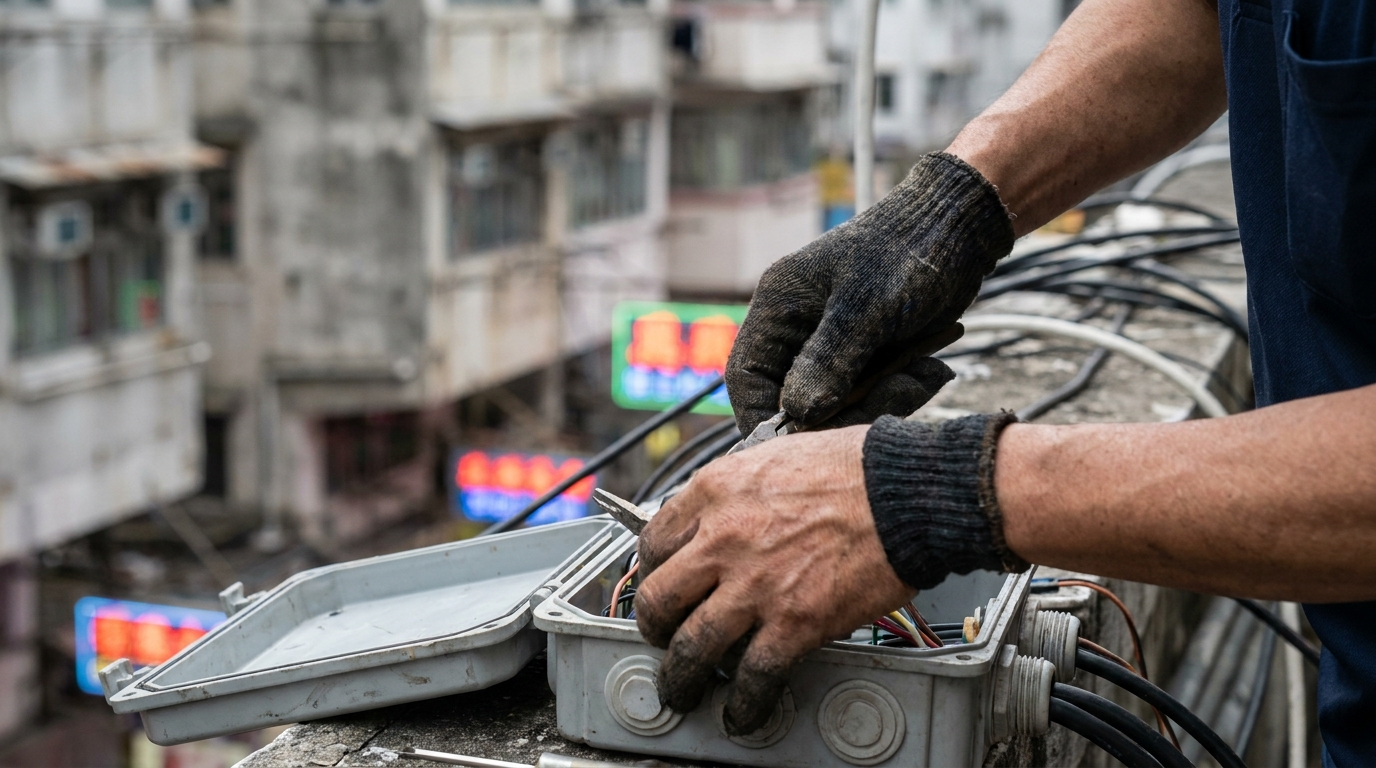
1. Tuen Mun Village House Broadband Status: Goodbye 8M Snail Pace
Many Hongkongers choose to move into New Territories village houses for more living space, keeping pets, and breathing fresh air. Areas in Tuen Mun like Lam Tei, Nai Wai, So Kwun Wat, Fu Tei, and Tseng Tau Tsuen have always been highly popular choices. However, in the past, mentioning "village house internet" was enough to make anyone cry. Often, an entire village only had 8M or 30M traditional copper wire (VDSL) coverage, and the monthly fees were a total rip-off. If the family wanted to watch 1080p YouTube or Netflix at night, it would constantly buffer, let alone gaming or doing WFH video calls.
Fortunately, major ISPs have heavily invested in NT West's fiber networks in recent years. Driven by the government's "Subsidy Scheme to Extend Fibre-based Networks to Villages in Remote Areas", many Tuen Mun village houses have had a massive upgrade, now boasting 1000M (1Gbps) or even 2500M Fiber-to-the-Home (FTTH) coverage! But having fiber coverage in the area doesn't guarantee you can pull the cable into your house. Village house geography varies wildly—some are right by the main road, others are in the middle of nowhere. So setting up village house broadband isn't like private housing where you just click a few buttons online and you're done. You need to understand your village's network layout in advance. Below, we'll break down the practical tips for you.
- Old Copper Wire (ADSL/VDSL): Usually only 8M to 30M, monthly fees can easily top $200. The connection is unstable and can drop anytime it rains.
- Fiber-to-the-Home (FTTH): Speeds start from 1000M and can go up to 10G. Stable connection, low latency for gaming—this is the ultimate goal for village house internet today.
- 5G Home Broadband: Converts a 5G mobile network into Wi-Fi. No wiring needed, plug-and-play. It's the best backup plan before fiber arrives.
2. Major ISPs Coverage Comparison
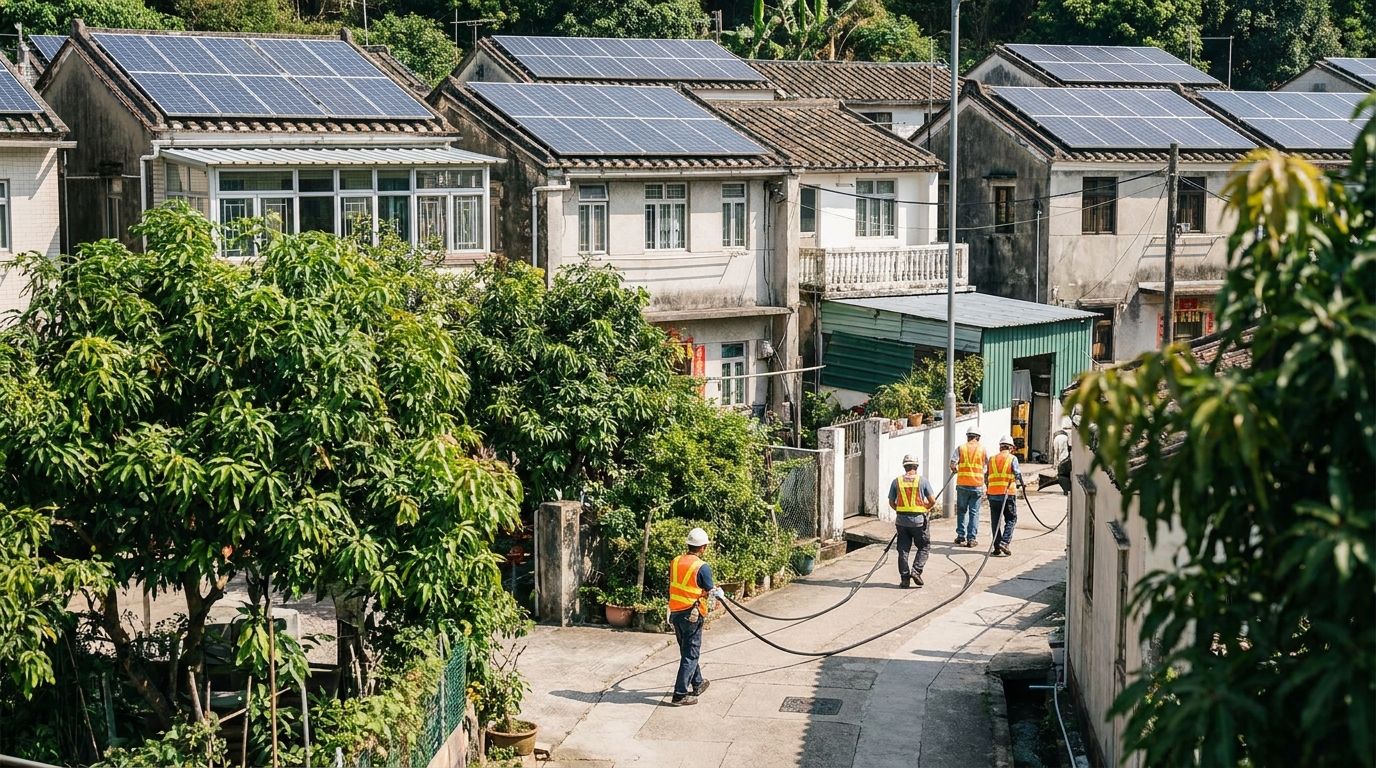
For village houses in the Tuen Mun district, coverage rates and pricing strategies vary greatly among ISPs. Generally speaking, HKT (Netvigator) has the most comprehensive infrastructure, managing to pull cables into many remote villages, but their prices are relatively firm. HKBN has been aggressively expanding its territory in NT West in recent years, covering many mid-sized village clusters with excellent value for money. As for CMHK and SmarTone, they often lease networks from HKBN or i-Cable, offering highly competitive monthly fee discounts to grab customers.
If you're an SME running a studio in a village house, or a hardcore gaming enthusiast, you can't just look at the price when choosing broadband. You also need to consider overseas bandwidth and connection stability. Here is a general performance comparison of major ISPs in the village house market:
| ISP | Estimated Tuen Mun Village House Coverage | Reference Monthly Fee (1000M) | Feature Analysis |
|---|---|---|---|
| HKT | Very High | Approx. $298 - $398 | Strongest infrastructure, most sufficient overseas bandwidth, but pricier |
| HKBN | Medium to High | Approx. $238 - $298 | Aggressively expanding village network recently, good value for money |
| CMHK | Medium | Approx. $198 - $258 | Mainly leases networks, most aggressive and affordable pricing |
🔥 Recommended Plan
If your Tuen Mun village house already has HKBN coverage, their recent 1000M FTTH plan offers incredible value. Factoring in a few months of fee waivers and installation fee rebates, the average can easily drop below $200/mo, making it a top pick for NT West village house residents!
3. What to Watch Out For When Pulling Cables Indoors?
For private housing, the technician just pulls a cable from the meter room in the corridor into your flat, and it's done in half an hour if things go smoothly. But village house wiring is a whole different world. They might have to pull hundreds of meters of cable from a street lamp post or an underground manhole all the way into your house. This process is full of variables, so you must be mentally prepared and do your homework beforehand. Don't wait until move-in day to find out you can't get online.
Here are the top three hurdles for village house wiring. It's best to inspect the environment yourself before booking a technician:
- Right of Way Disputes: This is the biggest headache. If the fiber cable has to cross someone else's private land (like your neighbor's garden) on its way from the street to your house, and you haven't got their permission, the technician has every right to refuse the job.
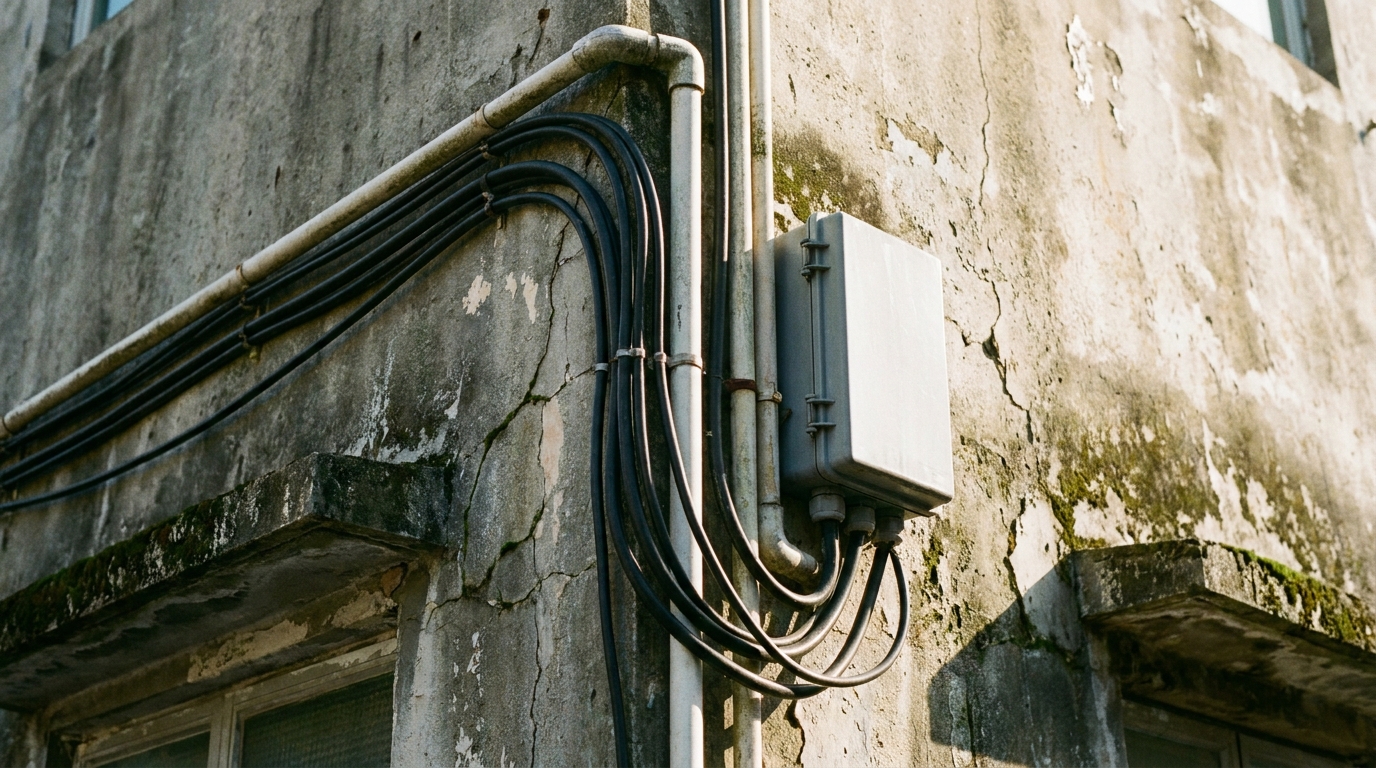
- Blocked Conduits: If your village house estate uses underground concealed conduits, they are often in disrepair. They might be filled with mud, or rats might have chewed through old wires. If the technician can't thread the cable through, you might have to hire a private contractor to clear the conduit before booking another appointment.
- Exterior Wall Working at Heights: If they run exposed wires along the exterior wall and you live on the third floor with a rooftop, the technician might need scaffolding or an extra-long ladder. In these cases, the ISP may charge an additional high-altitude work surcharge.
⚠️ Note: Never hire someone randomly to pull outdoor fiber cables yourself. The outdoor telecom facilities are the property of the ISPs, and unauthorized modifications can easily lead to legal trouble and massive compensation claims!
4. 5G Home Broadband: The Savior Before Fiber Arrives
If the village you live in happens to be in a "no man's land" where fiber hasn't reached, or if right-of-way issues are deadlocked, what do you do? Do you really have to suffer with 8M copper wires? With today's tech, 5G home broadband has become a lifesaver for many village house residents. SmarTone, 3HK, CMHK, and CSL all offer 5G home broadband plans. They give you a 5G router with a SIM card—just plug it into a power socket at home and it instantly broadcasts Wi-Fi. Completely wire-free and hassle-free.
However, 5G broadband runs on mobile data after all, so the speed and stability definitely can't match true FTTH. In different Tuen Mun villages, the 5G reception for each network varies wildly. For example, SmarTone might have full bars in some Lam Tei villages, but in So Kwun Wat, CSL or 3HK might be faster. So before applying, you must figure out which network gets the best reception at your house.
- Pros: No installation fee, plug-and-play without waiting for a technician, you can take the whole router with you when you move, and cheap monthly fees (usually around $148-$198).
- Cons: Speeds are affected by weather and peak hours (usually hovering around 100M-300M), higher Ping makes it unsuitable for competitive online gaming, and the router must be placed near a window.
💡 Tip: Many ISPs offer a 7-day cooling-off period or free trial. We highly recommend taking a 5G router home to test the actual speeds before officially signing a contract!

5. Exposing Village House Broadband Traps
When setting up village house broadband, besides checking coverage and monthly fees, there are many hidden charges and terms that can easily blow your budget. Many street booth sales reps might not explain things in detail just to close a deal, and it's too late once you've signed the contract and realize you've been trapped. Here are the most common village house broadband pitfalls—you must stay highly alert and read the contract fine print carefully.
First is the installation fee. Private housing often gets the installation fee waived, but because village house wiring costs are extremely high, ISPs rarely waive it completely. A standard village house installation fee is around $680, but if the technician arrives and finds that special engineering is needed (like crossing a river or threading through an extra-long underground conduit), they might quote an "extra engineering fee" on the spot, which can easily top a thousand bucks. So it's best to ask clearly during application: if they ask for more money on-site, do you have the right to cancel the contract unconditionally?
- Spicy Relocation Fees: Village house relocation fees are usually more than double those of private housing. If you're only renting a village house for a year, think carefully about the cost of moving out during the contract period.
- Remote Area Surcharges: Even within the same village, living at the entrance versus the end of the village can result in different fees. Some ISPs charge a monthly surcharge of a few dozen dollars for specific house numbers.
- Coverage Illusions: Just because the online system shows coverage doesn't mean your specific floor has it. Sometimes the ground floor can get wired, but the third floor can't due to conduit issues. So you must wait until the technician actually successfully connects the line before cutting your old plan!
Summary (Final Thoughts)
To sum up, the internet environment for Tuen Mun village houses has improved massively compared to the past. As long as you're willing to spend a little time doing your homework, you can definitely find fast and affordable fiber broadband. From understanding your estate's current coverage to comparing the pros and cons of major ISPs, assessing the feasibility of indoor wiring, and spotting hidden fees—every step heavily impacts your internet experience for the next two to three years.
If you find that fiber is truly hopeless, don't lose heart. Today's 5G home broadband can absolutely meet your daily needs for binge-watching and web surfing. Before buying or renting a village house, don't be lazy—make sure to check the network coverage thoroughly. If you still have a lot of questions about village house broadband, aren't sure which ISP suits you best, or want to avoid all the traps, your best bet is to get help from a professional broadband consultant. They can use internal systems to accurately check coverage for you, and even negotiate the best exclusive hidden deals, saving you both time and money while effortlessly solving your village house internet worries!