
Published: 25 April 2026 | Category: Travel Data
1. Why You Need to Sort Out Your Internet Before Hitting India & Sri Lanka
More and more Hongkongers are challenging themselves by packing a backpack and heading to India or Sri Lanka for a long trip. Many enterprise users and digital nomads are even choosing to live in South Asia while working remotely. Travelling in 2026 without mobile data is practically impossible—especially in South Asia, where you'll constantly need Google Maps to navigate, translation apps to chat with locals, or instant internet access to book train tickets and accommodation. Many think buying a SIM card at the local airport is the cheapest route, but for long-term stays or backpackers, sorting out your mobile plan in Hong Kong beforehand is definitely the smarter move.
Why don't we recommend winging it when you land? There are a few very practical reasons. India's telecom regulations, in particular, have become increasingly strict, making buying a simple SIM card feel like an obstacle course. If you're planning to stay for 30 days or even a few months, getting your mobile data sorted early is crucial.
- Extremely complicated real-name registration: Buying a local SIM in India usually requires a passport copy, visa, photos, and sometimes even a local reference. Approval takes time, and it could easily take two to three days just to get your card activated.
- Airport SIMs are overpriced: While it's relatively easy to buy a card at Colombo Airport in Sri Lanka, tourist packages sold at airports are usually priced higher, and the data allowance might not be enough for a long-term stay.
- You need to check in immediately: After a long-haul flight, the first thing you want to do is message your family or contact your local driver. If you haven't bought roaming data in advance, queuing up for a SIM card at the airport could waste hours.
- Avoid language barriers and scams: Buying a card from a street vendor can easily lead to miscommunication or hidden fees. Buying in advance from a Hong Kong telecom provider guarantees transparent pricing, and you can always contact HK customer service if anything goes wrong.
2. South Asia Roaming in 2026: Physical SIM vs. eSIM
As we step into 2026, eSIM (embedded SIM) technology has become incredibly mainstream, with most new smartphones featuring built-in eSIM capabilities. For a long trip to India and Sri Lanka, should you buy a traditional physical SIM card or just use an eSIM? It really depends on your personal needs and phone model. For backpackers, travelling light is key, while for business travellers, stability and flexibility are top priorities. Let's break down the pros and cons of both so you can make the best decision for your itinerary.
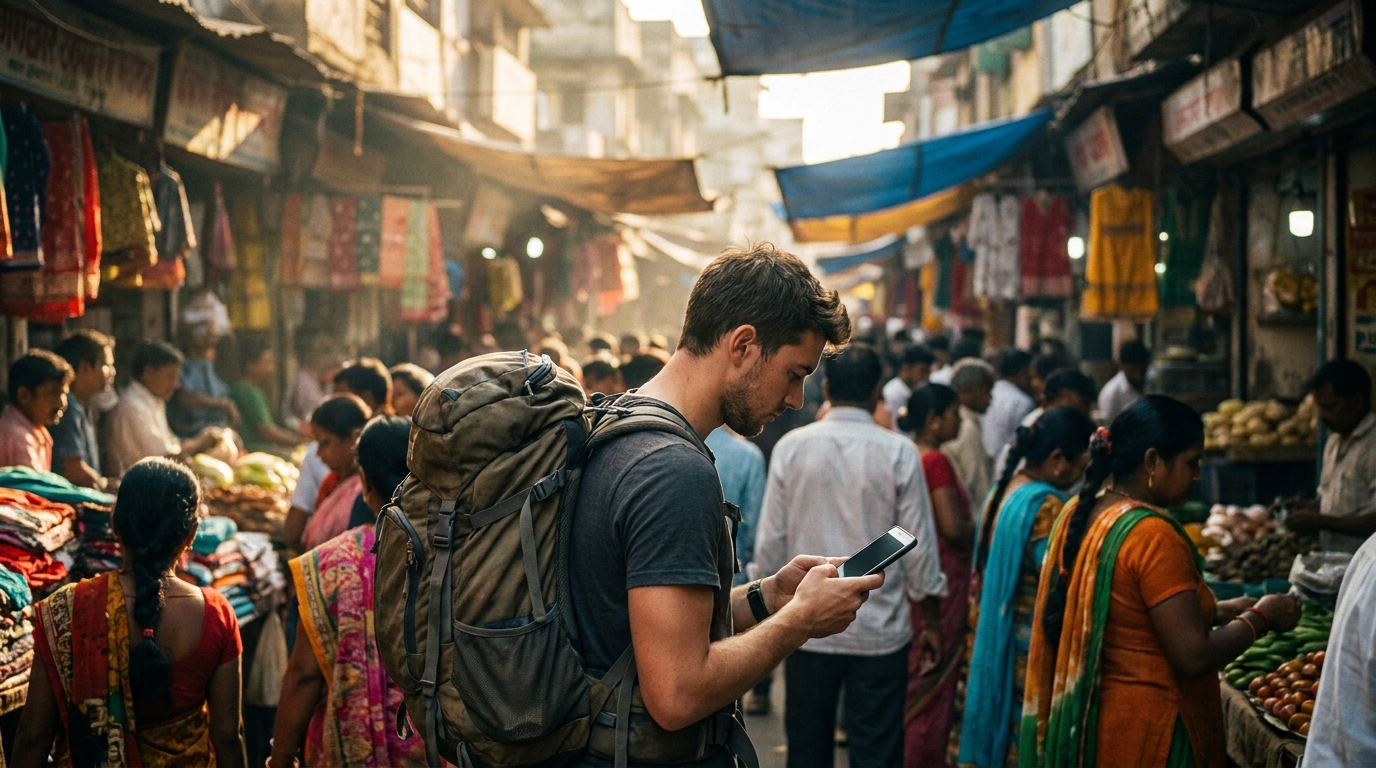
The biggest advantage of a physical SIM card is that it's "plug and play." You don't need to worry about whether your phone supports eSIM; as long as it's unlocked, you're good to go. The downside is waiting for delivery or going out to buy one, plus you have to carefully store your original Hong Kong SIM card—losing it would be a disaster. On the flip side, eSIMs are super convenient. Just pay online, scan a QR code, and you're connected, saving you the hassle of using a SIM ejector pin. You can also keep your HK number active to receive SMS (like bank OTPs), which is perfect for Hongkongers staying abroad for an extended period.
| Comparison | Physical Travel SIM | Travel eSIM |
|---|---|---|
| Purchase & Activation | Requires delivery/store visit; plug and play | Instant purchase; activate via QR code |
| Dual SIM Flexibility | Takes up a physical SIM slot | No slot needed; keep original SIM for SMS |
| Risk of Loss | Easy to lose your original HK SIM | No physical card, zero risk of loss |
| Phone Compatibility | Works with all unlocked phones | Only for newer models supporting eSIM |
💡 Tip: Before buying an eSIM, make sure to dial *#06# on your phone to see if an "EID" number pops up. If it does, your phone supports eSIM!
3. Top India & Sri Lanka Travel SIM Plans Compared
At the end of the day, price and data allowance are what everyone cares about most. There are plenty of options on the market, ranging from roaming data passes offered by mainstream Hong Kong telcos (like 3HK, CMHK, SmarTone) to third-party providers specialising in travel SIMs. If you're staying long-term, say 30 or even 90 days, paying a daily roaming rate is definitely not cost-effective. You should be looking for "monthly plans" or "large data" packages. We've handpicked and compared a few long-term plans perfect for South Asia backpackers to help you save some travel funds.
Keep in mind that coverage varies between plans. Some cards only cover India, while others focus on "Multiple South Asian Countries" or "Global Access." If your itinerary takes you from India down to Sri Lanka, buying an Asia-Pacific/South Asia roaming card that covers both is the most convenient, so you don't have to buy a new card when crossing the border. Below, we've listed a few representative quotes based on a 30-day period for your reference.
| Provider / Type | Data (30 Days) | Coverage | Est. Price |
|---|---|---|---|
| Mainstream HK Telcos (APAC Roaming) | 15GB (throttled after) | India, Sri Lanka, etc. | $198 - $238 |
| Travel eSIM Platforms (India Only) | 20GB High-speed | India Only | $180 - $210 |
| Travel eSIM Platforms (South Asia) | 10GB High-speed | India, Sri Lanka, Nepal | $258 - $298 |
| Apliu Street / Online Discount SIMs | 1GB/day (Total 30GB) | India, Sri Lanka | $130 - $160 |
🔥 Recommended Plan: APAC Multi-Country Roaming Pass
If your trip spans multiple countries (e.g., India + Sri Lanka + Maldives), we highly recommend the "APAC Multi-Country Roaming Pass" offered by Hong Kong telcos. While it costs around $198/mo, it wins on network stability, automatically switching to the strongest local operator, and comes with HK customer support. For backpackers on a long, arduous journey, this peace of mind is absolutely worth the price.
4. Avoid the Traps: What to Know Before Buying a South Asia SIM
The worst thing about buying a SIM card is falling into a trap—thinking you bought "unlimited data" only to find it buffering after two YouTube videos. In places like India and Sri Lanka, the network infrastructure might not be as robust as in Hong Kong, and signal reception can vary wildly between regions. So before you hand over your cash, there are a few things you absolutely must clarify. Otherwise, crying over no internet when you arrive won't help. Let's go over some common pitfalls and tips to avoid getting scammed.
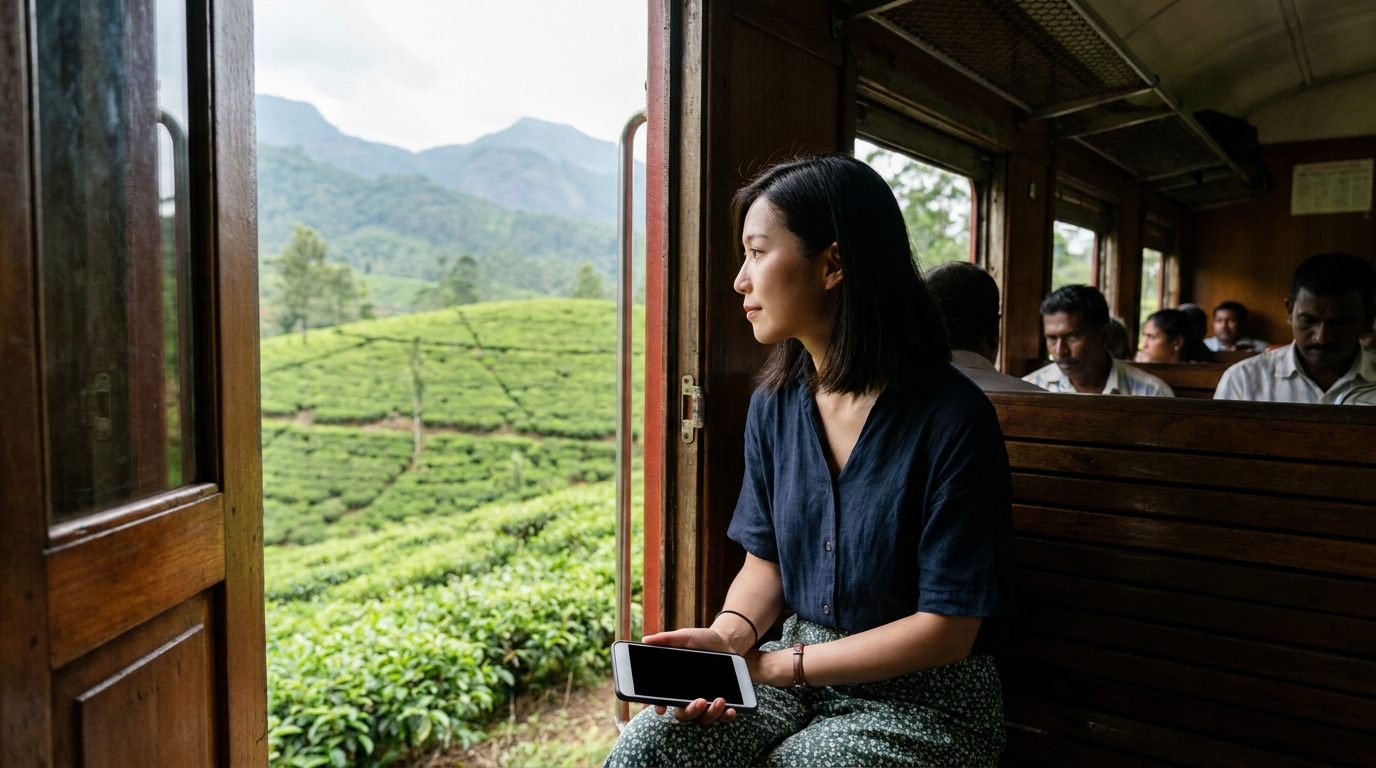
First and foremost, you need to know who the local telecom giants are. In India, Airtel and Jio are the big two with the best coverage; in Sri Lanka, Dialog and Mobitel are your top choices. When buying a roaming card, make sure to check which local network it piggybacks on. Additionally, the Fair Usage Policy (FUP) is another frequently overlooked detail—many cheap cards hide the devil in the details.
- Fair Usage Policy (FUP) Traps: Cards advertising "30 days unlimited internet" often only give you full-speed 4G/5G for the first 500MB or 1GB per day, throttling you down to 128kbps once you hit the cap. That speed is barely enough to reply to a WhatsApp message, let alone use Google Maps. Always read the terms carefully.
- Check Network Coverage: India is massive. If you're heading to remote areas (like Ladakh), many foreign roaming cards won't get a signal, and even some local telcos lack coverage. Research the network situation at your destination before you fly.
- Hotspot Restrictions: If you plan to buy one card and tether Wi-Fi to your travel buddies or your laptop, be aware that some travel eSIMs prohibit or restrict network sharing (tethering).
- Calculate Validity Precisely: Most travel cards start the clock the moment you insert them or connect to the local network, counting 24 hours as one day. Calculate your arrival and departure times to ensure you buy enough days, so you don't suddenly lose connection on your last day.
⚠️ Warning: If you ultimately decide to buy a physical SIM card locally in India, you must prepare physical passport photos and a passport copy. The Indian government has extremely high anti-terrorism requirements, making the activation process very strict. Some regions even ban foreigners from buying local prepaid cards, so please prepare a backup roaming plan in advance.
5. Digital Nomad Essentials: Backup Internet Plans for Remote Work
If you're not just there to play, but plan to be a digital nomad working by a beach in Sri Lanka or a cafe in India, your internet requirements are on a whole other level. Video calls, uploading large files, and accessing company intranets all demand an extremely stable and high-speed connection. In South Asia, relying on a single internet source is highly risky, as occasional power outages or cell tower failures are commonplace. You absolutely need a solid backup plan.

For enterprise users or remote workers, investing a bit more in your network gear is absolutely worth it. The following advanced internet strategies can ensure your work isn't interrupted by disconnections during your long stay in South Asia, keeping your productivity at its peak.
- Dual-Network Strategy: Use Airtel/Dialog as your primary card, and choose a roaming plan on the Jio/Mobitel network for your secondary card (eSIM). When one network goes down, instantly switch to the other to ensure you're never offline.
- Portable Cloud SIM Wi-Fi Router: Although it means carrying an extra device, Cloud SIM technology (like GlocalMe) can automatically identify and connect to the strongest local signal. Plus, they have long battery lives, making them perfect for those working long hours on a laptop.
- Hotel/Airbnb Wi-Fi + VPN: For long stays, you must rent a place with Wi-Fi, but the security of some public Wi-Fi in South Asia is questionable. Always use a reliable VPN to protect confidential company data. Use your mobile data as a failover backup.
- Buy Large Data Packages: Work tasks consume a lot of data. It's better to buy a 50GB or even 100GB long-term data pack rather than a daily plan that throttles your speed, ensuring you always have high-speed bandwidth available.
6. Summary: Pack Your Bags and Get Ready to Go
To sum up, if you're gearing up to backpack or live in India and Sri Lanka, sorting out your internet is one of the most important pre-departure tasks. In 2026, technology offers us so much convenience. Whether you opt for a traditional, budget-friendly physical travel SIM or the scan-and-go convenience of an eSIM, the key is to base your decision on your trip length, data usage, and phone hardware. Don't just go for the cheapest option and end up with a throttled 500MB/day card—getting lost in a foreign land with no internet is definitely not worth the savings.
Before you set off, make sure you've ticked off the following prep work, so you can fully enjoy the unique vibes and culture of South Asia with peace of mind:
- Check if your phone supports eSIM and is unlocked.
- Estimate your data needs for the long stay (more video streaming or just messaging?).
- Compare the Fair Usage Policy (FUP) and network coverage of different plans.
- Prepare at least one backup internet plan for important work.
If you're still on the fence about which telco's roaming pass is the best deal, or if you want to compare more of the latest mobile plans, keep an eye on market updates. Pick the South Asia internet plan that suits you best, and embark on your backpacking journey stress-free!