
Published: 28 July 2026 | Category: User Story
1. The Uni Student Dilemma: Living in a Hall or Renting?
Whenever a new academic year kicks off or DSE results are released, many university students face a tough choice about accommodation: should you try your luck applying for a university hostel (aka "living in a hall"), or flatshare a private apartment or village house with a few friends? Living in a hall lets you soak up the uni culture and meet students from different faculties. On the flip side, renting your own place offers ultimate freedom—no curfews and you make the rules. However, when budgeting, many students only factor in rent and utilities, completely overlooking a hidden expense that no modern human can live without: home broadband!
Let's be real—whether it's submitting assignments, researching for group projects, attending Zoom lectures, or just chilling with Netflix and gaming at night, uni students rely heavily on a stable internet connection. A laggy network is enough to drive anyone crazy. There's a world of difference between the network setups in halls and private rentals. So, which one offers better value? How do you get the smoothest internet experience on a tight pocket money or part-time job budget? Today, we're breaking down this student broadband dilemma.
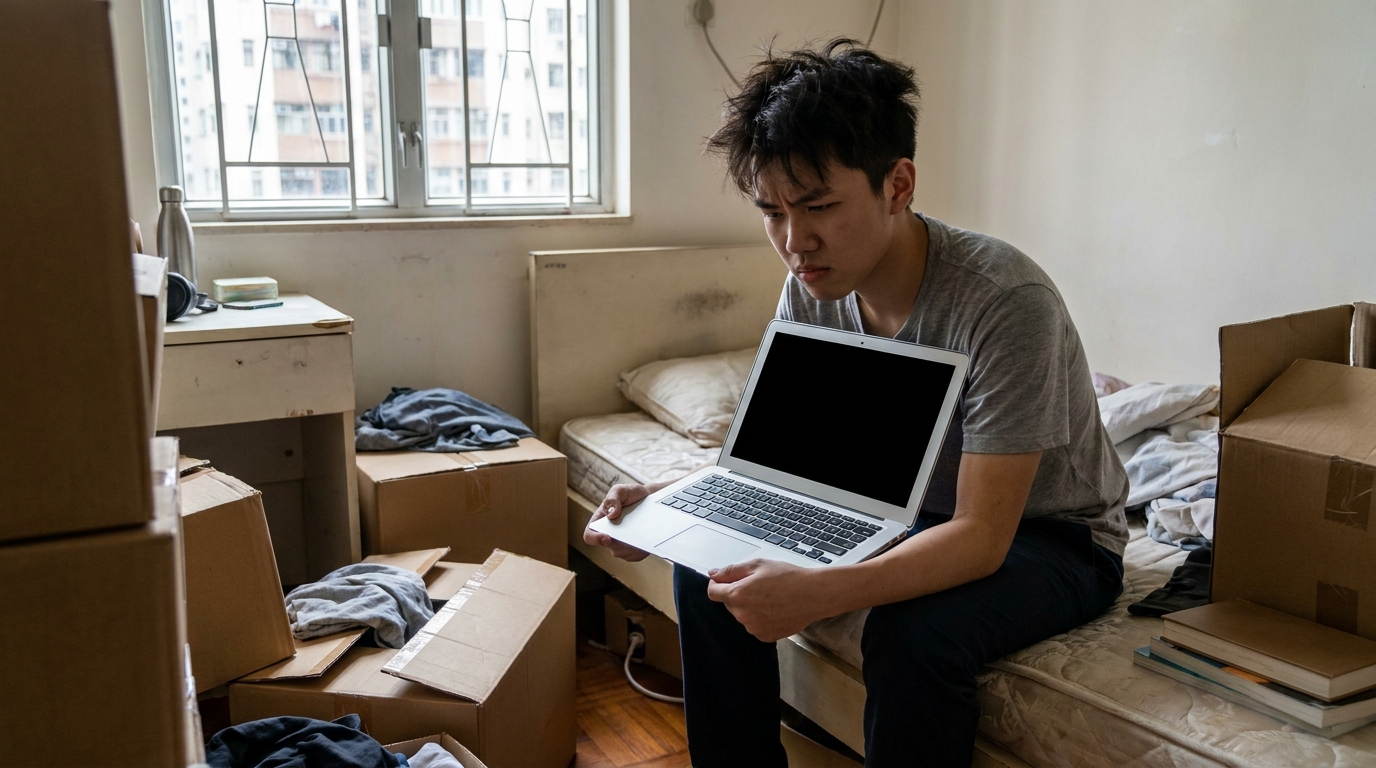
2. The Hall Internet Myth: Is Free Always Better?
If you're lucky enough to score a hall place, congratulations! Most university halls in Hong Kong provide free Wi-Fi or LAN ports. Hearing the word "free," many students immediately think, "Awesome! I can save on broadband fees!" But free stuff often comes with hidden costs. The hall network is shared among hundreds of residents in the same building. Browsing for research in the afternoon might be fine, but once prime time hits after 11 PM—when everyone is gaming or streaming 4K videos—the internet speed will plummet, leading to disconnections or sky-high ping.
On top of that, some university halls have strict firewall settings that might block specific ports, making it impossible to connect to certain online games or slowing P2P downloads to a crawl. That's why many seasoned hall residents prepare a backup plan. The most common workaround is to beef up their mobile plan by upgrading to unlimited 5G data or buying a high-capacity annual SIM card, then using a mobile hotspot for their laptops. While this costs an extra few dozen to over a hundred bucks a month, it guarantees you won't disconnect during crucial moments—like course registration, assignment deadlines, or ranked gaming matches.
💡 Tip: If you live in a hall and want smooth gaming, buying a high-data 5G SIM card or a plug-and-play 5G broadband router is often better than sticking to the painfully slow hall Wi-Fi. At least you get dedicated bandwidth!
3. Broadband Considerations for Renting: Fibre or 5G?
In contrast, if you're flatsharing a private apartment with friends, you'll have to sort out the broadband yourself. Here, the biggest pain points are the "contract period" and "installation issues." For traditional fibre-to-the-home broadband, telecom providers usually require a 24-month or even 36-month contract. But uni students often only sign a one-year fixed lease plus a one-year flexible lease, or they might move out after going on exchange. If you install traditional broadband, moving midway means paying hundreds of dollars in relocation fees, and terminating early requires paying off the remaining balance—which is definitely not worth it.
That's why many renting students are now turning to "5G home broadband." Providers like HKT, HKBN, CMHK, SmarTone, and 3HK all offer plug-and-play 5G broadband plans. The biggest advantage is that it's ready to use out of the box—just plug the router into a power socket at home and you're online. When you move, you simply unplug the router and take it to your new place, completely avoiding relocation fees and the hassle of waiting for a technician. Plus, major telecom providers usually roll out "student exclusive offers" during the back-to-school season. Just show a valid student ID, and monthly fees can drop to as low as $118 to $148, often with router rental included. The value for money is unbeatable.

4. Student Broadband Plans Comparison
To make things crystal clear, we've put together a comparison table of common internet solutions for hall residents and renters. You can check out which option suits you best based on your budget and internet habits:
| Accommodation | Broadband Option | Estimated Monthly Fee | Pros | Cons |
|---|---|---|---|---|
| Uni Hall | Free Hall Wi-Fi + 5G Secondary/Annual SIM | $50 - $100 (SIM card cost) | Cheapest, included in hall fees | Extremely slow during peak hours, possible blocked ports, unstable connection |
| Renting | Traditional 1000M Fibre Broadband (Student Plan) | $100 - $150 | Highly stable, low ping for gaming, unlimited data | Requires technician installation, usually 2-year contract, relocation fees apply |
| Renting | 5G Home Broadband (Plug & Play) | $118 - $168 | Plug and play, take it when you move, short contracts available | Signal depends on location, slightly higher ping for gaming |
⚠️ Note: If you opt for 5G home broadband, we strongly recommend checking the network coverage of your rented flat before applying! Some tong laus (walk-up buildings) or remote village houses might have poor reception, which will affect your internet experience.
5. Summary: Choose the Right Broadband for Your Living Situation
After reading the analysis above, you should have a good idea of which student broadband offers the best deal. To sum up, if you're one of the lucky ones living in a hall, you've basically saved a chunk of money already. The smartest move is to spend a little on a high-data 5G SIM card as a backup for emergencies. If you're renting, your first choice should definitely be a broadband plan tailored for students. If your lease is short or you expect to move, 5G home broadband is absolutely the most flexible and cost-effective option. But if you and your flatmates are hardcore gamers, it's better to chip in for a 1000M fibre connection to enjoy the ultimate stable network.
No matter where you decide to live, major telecom providers roll out various back-to-school promos before the academic year starts. Don't want the hassle of asking at every single store? The smartest way is to use a professional platform to help you compare prices! Remember, your student ID is your strongest weapon. Before signing up for any plan, always ask if there are "tertiary student exclusive offers." You could easily save dozens of dollars a month—enough for a few good meals over the year!

🔥 Recommended Plans
Student plans from different telecom providers update daily. Want to know which one is the cheapest right now or gives out the most vouchers? Check the latest offers through King Broadband immediately! Our specialists will match you with the best student broadband plan based on your address and needs!