Published: 12 September 2026 | Category: In-Depth Analysis
1. Why is Hong Kong's IPv6 Adoption Rate in 2026 So Important?
Whenever you're streaming videos, gaming, or sending WhatsApp messages, you're relying on an IP (Internet Protocol) address to find your way around the web. For decades, we've been using IPv4, which maxes out at about 4.3 billion addresses. Sounds like a lot? But think about it—nowadays, the average person in Hong Kong easily owns two or three mobile phones, a tablet, and a smart watch, not to mention the smart TVs and countless IP cams at home. The truth is, IPv4 addresses "dried up" years ago! To solve this, the industry has been pushing the transition to IPv6. It offers an astronomical number of addresses—so many that you could assign an IP to every single grain of sand on Earth.
According to global internet data, while Hong Kong's IPv6 adoption rate has been steadily climbing, we used to lag behind some Western countries and even our Asian neighbours. However, by 2026, we're going to see a massive, breakthrough shake-up. With 5G networks fully maturing, 6G tech beginning to sprout, and an explosion of IoT (Internet of Things) devices across Hong Kong homes and businesses, the old combo of IPv4 and NAT (Network Address Translation) simply can't handle the demand for ultra-low latency and massive connectivity anymore. That's why 2026 is seen as the critical turning point for Hong Kong's full transition to IPv6.
💡 Tip: Even if you haven't noticed a huge difference yet, major tech giants like Apple, Google, and Netflix are already prioritising IPv6. If your network supports it, your connection response times will be noticeably faster!
So why is 2026 such a crucial turning point? Here are the core drivers pushing the entire Hong Kong telecom market to upgrade:
- Rapid Expansion of 5G and IoT: From smart bulbs to autonomous vehicles, every device needs an independent IP for direct connection. IPv4 simply can't dish out that many public IPs.
- Rise of Big Data and Cloud Computing: As businesses migrate to the cloud, IPv6 natively supports more efficient packet routing, drastically reducing data transmission latency.
- Upgraded Cybersecurity Needs: IPv6 was designed with IPsec (IP Security) built-in from day one, offering stricter standards for data encryption and anti-tampering compared to IPv4's bolted-on security mechanisms.
- ISP Operational Costs: It costs telcos a fortune to maintain massive Carrier-grade NAT (CGNAT) equipment just to patch up IPv4's shortcomings. Pushing for full IPv6 adoption will actually save them a lot of infrastructure expenses in the long run.
2. IPv6 Deployment Progress Among Major Hong Kong ISPs
When it comes to actual deployment, Hong Kong's major ISPs have been putting in the work, even if it's flown under the radar. The current mainstream approach is "Dual-Stack" technology, meaning they assign you both IPv4 and IPv6 addresses simultaneously to ensure old websites still load while new services run smoothly. On the mobile network front, Hong Kong's progress is actually incredibly fast. However, for fixed-line home broadband, the rollout has been a bit patchy because it involves rewiring older buildings and dealing with outdated routers in customers' homes.
If we look closely at major ISPs like HKT, HKBN, CMHK, SmarTone, and 3HK, they've basically fully activated IPv6 on the mobile data (4G/5G) level. If you're browsing on an iPhone or Android released in the last few years, chances are you're already using IPv6. But when it comes to home broadband and commercial broadband, it's a different story. Some older Fibre-to-the-Home (FTTH) or VDSL plans might still be handing out a single IPv4 address. By 2026, we expect all major ISPs to make IPv6 the default for all new or renewed broadband plans.
| ISP | Mobile Network (5G/4G) IPv6 Status | Home Fixed Broadband IPv6 Status | Commercial Broadband IPv6 Status |
|---|---|---|---|
| HKT / CSL | Fully Supported (Dual-Stack) | Supported on most fibre plans | Fully configured upon client request |
| HKBN | Fully Supported | Gradually expanding (New plans prioritised) | Supported, depending on upgrade plan |
| CMHK | Fully Supported | Partially supported (Depends on estate coverage) | Supported on leased lines |
| SmarTone | Fully Supported | Fully supported on 5G Home Broadband | Supported |
| 3HK | Fully Supported | Supported on 5G Broadband | Supported on enterprise leased lines |
As you can see from the table above, mobile networks are already dominated by IPv6. As for your home broadband, if you find your internet is still lagging or you keep dropping out of P2P multiplayer games, it might be because your plan or router hasn't switched to IPv6 yet. By 2026, Dual-Stack technology is expected to become the bare minimum standard for all broadband in Hong Kong, and we won't have to worry about running out of IP addresses anymore.
3. What's the Real Impact on Everyday Home Users?
A lot of people ask, "Will my monthly broadband bill go up if I switch to IPv6?" The answer is absolutely not! IPv6 is an underlying network tech upgrade, and telcos won't charge you extra for it. However, for everyday home users, upgrading to IPv6 is definitely a huge win, especially when it comes to gaming and smart home experiences, where you'll see a visible improvement. Back in the IPv4 days, because of the address shortage, ISPs often used CGNAT to cram hundreds of users behind a single public IP. This made setting up Port Forwarding at home a nightmare and caused "Strict NAT" issues during gaming, making it impossible to find lobbies or resulting in highly unstable connections.
With IPv6, the biggest selling point is "true End-to-End Connectivity." This means your home PS5, Xbox, or PC will be assigned a unique public IPv6 address, connecting directly to game servers or opponents without going through NAT translation. Not only does this drastically lower your Ping (latency), but it also completely eliminates connection failures. Beyond gaming, if you've got a dozen smart switches, IP cams, and sensors installed at home, IPv6 ensures every single device has its own independent identity. This means faster response times and less NAT-processing load on your router, making your whole-home Wi-Fi much more stable.
🔥 A Godsend for Gamers: Goodbye NAT Type 3
If you play Call of Duty, FIFA, or Monster Hunter, you've definitely experienced the agony of connection failures or not being able to join your friends' lobbies. As long as your ISP and router have IPv6 enabled, your console will grab a real IP directly, easily achieving NAT Type 1 or Type 2 (Open/Moderate). From then on, matchmaking is instant, and your Ping is rock solid!
However, to enjoy the perks of IPv6, your home hardware needs to play ball. Here are a few key things home users need to look out for:
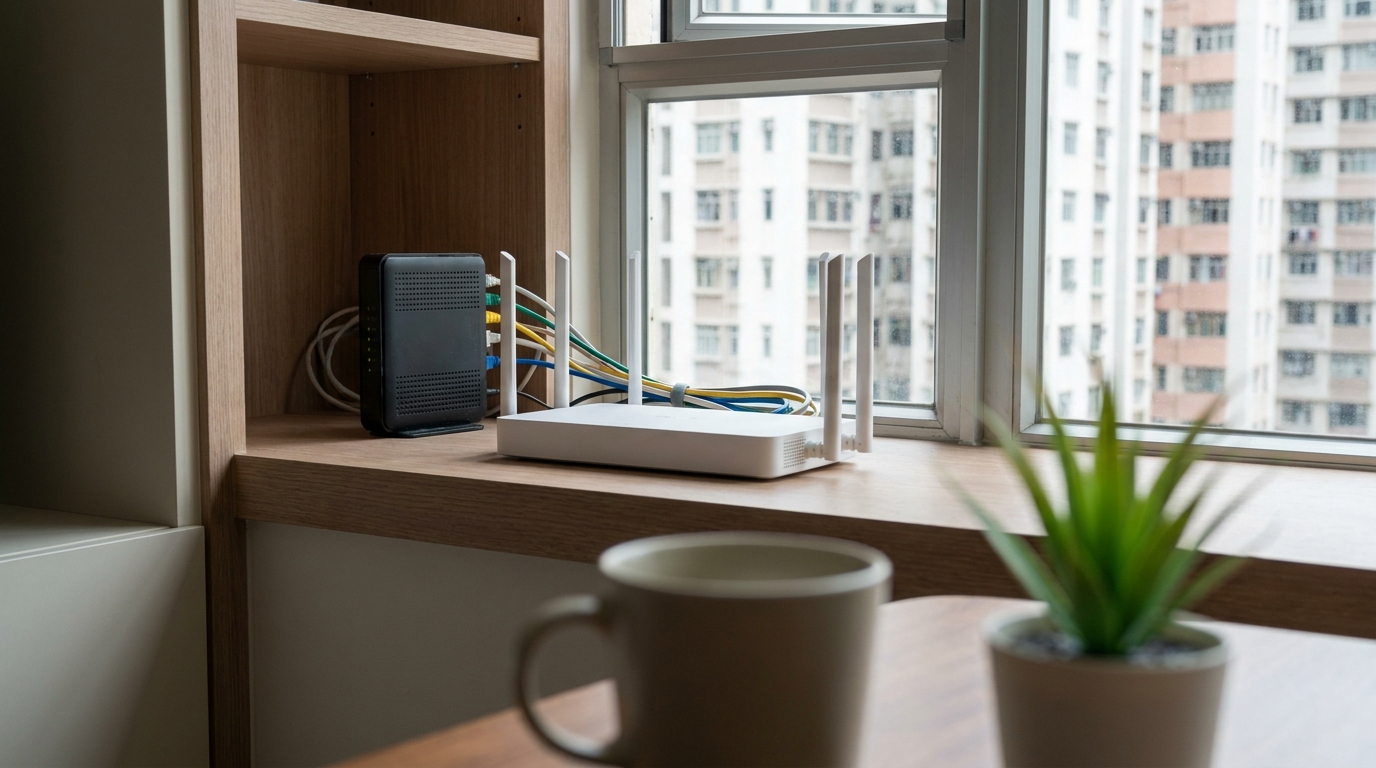
- Check Router Support: If your Wi-Fi router is over 5 years old, it likely has IPv6 disabled by default, or its hardware might just struggle to handle it. It's highly recommended to upgrade to a next-gen router that supports Wi-Fi 6 or Wi-Fi 7.
- Enable IPv6 in Settings: Even if your ISP is feeding you IPv6, many routers have it turned off by default. You'll need to log into your router's admin panel, find the "IPv6" or "Internet Setup" section, and select "Auto" or "DHCPv6" to turn it on.
- Legacy Device Compatibility: A tiny fraction of very old smart home devices might not recognise an IPv6 network. But don't worry—since telcos provide Dual-Stack technology, your older devices can still connect via IPv4 without any interference.

4. Hidden Costs and Opportunities for SMEs Upgrading to IPv6
For Hong Kong SMEs, the 2026 IPv6 wave is about much more than just "smoother gaming." It's a major issue concerning cybersecurity, IT infrastructure costs, and future business development. As more overseas clients and local mobile users fully transition to IPv6, if an SME's corporate website, online store, or customer service system is still clinging to IPv4, IPv6 users will have to jump through multiple translation gateways to connect, which can slow down load times by several seconds. In the efficiency-driven business world, a few seconds of lag could cost you a five-figure deal. Therefore, upgrading your commercial broadband to IPv6 is a necessary step to boost your digital competitiveness.
However, upgrading to IPv6 also hides some costs and security pitfalls for SMEs. In the IPv4 era, internal company networks were usually tucked away behind firewalls using NAT, making it impossible for outsiders to directly access internal computers. But with IPv6, because every computer, printer, and server gets assigned a real public IP, if your IT staff or outsourced vendor drops the ball and fails to properly configure IPv6 firewall rules, your company's confidential data could be left completely exposed to the internet, making you an easy target for hackers and ransomware.
⚠️ Cybersecurity Warning: SMEs should never blindly enable IPv6 on legacy firewalls. Many older enterprise-grade firewalls have weak packet inspection capabilities for IPv6. Before turning it on, ensure you've updated to the latest firmware and have a professional IT expert rewrite your inbound and outbound security rules.
To prepare for the full rollout of IPv6 in 2026, SME owners and IT managers should start auditing their internal network assets right now. Here are a few practical points SMEs must consider before upgrading:
- Hardware Upgrade Budget: If older switches, load balancers, or firewalls don't support IPv6, you might need to set aside anywhere from a few thousand to tens of thousands of HKD for hardware replacements.
- VPN and Remote Work Settings: If employees need to WFH and connect to company servers, your existing VPN system must be tested for perfect IPv6 compatibility to avoid IP address conflicts or connection failures.
- Check Commercial Broadband Upgrades with ISPs: Many telcos' older commercial broadband contracts (like plans using fixed IPv4 addresses) might require a contract renewal or a plan upgrade to switch to IPv6. Make sure to chat with your Account Manager early to sort out a transition plan.

5. Summary: Get Ready for the IPv6 Era
By 2026, IPv6 adoption in Hong Kong is expected to hit an all-new peak. From smartphones and home broadband to enterprise cloud servers, IPv6 will become the cornerstone of the entire digital ecosystem. While IPv4 won't be completely phased out just yet, and Dual-Stack technology will stick around for a while, if you want to enjoy the lowest network latency, the smoothest connections, and a safer network environment, embracing IPv6 is definitely a case of "the sooner, the better."
Whether you're an everyday user who just wants to stop disconnecting during home gaming sessions, or an SME owner looking to secure your company's network and speed up website load times, now is the time to review your network setup. Don't wait until your internet is unbearably slow or your old gear is completely obsolete before scrambling to fix it. Starting today, you can follow these simple steps to get ready for the IPv6 era:
- Step 1: Check Your Status. Use your phone or computer to search for an "IPv6 Test" website. One click will tell you if your current network is already using IPv6.
- Step 2: Upgrade Your Gear. If you find your home router is too old to support it, now is the perfect time to grab a new router, especially with Wi-Fi 7 becoming more mainstream.
- Step 3: Compare Prices and Switch. If you realise your current ISP's broadband plan still doesn't support IPv6, or the speeds just aren't cutting it anymore, it's worth checking the market for better-value, technologically updated fibre broadband plans.
If you have any questions about upgrading your broadband, or want to know which ISP's fibre plan best fits your IPv6 needs, remember to let King Broadband help you compare prices! We'll provide you with the latest, most accurate market info to help you find the most cost-effective, stable broadband solution, so you can easily welcome the 2026 next-gen network!