
Published: 3 June 2026 | Category: eSIM
1. Heading to Europe? Why You Must Choose an eSIM Now
It's 2026. When you travel to Europe for a holiday or business trip, are you still lugging around a heavy Wi-Fi egg? Or carefully poking your SIM card tray with a paperclip on the plane, terrified of dropping your primary Hong Kong SIM card under the seat? In the past, getting online in Europe was a massive headache, constantly worrying if your card would work when crossing borders. Luckily, tech has moved on, and eSIMs have become the ultimate travel essential.
Why do you specifically need an eSIM for Europe? While there are many European countries, a simple two-hour train ride often means crossing a border. With a traditional physical SIM, you'd have to queue up at the local airport or train station to buy a local telecom's SIM card, dealing with tedious procedures and passport registrations. With an eSIM, you can buy it online in Hong Kong before you even depart. The moment your plane lands, just turn off airplane mode, and you're instantly online to message your family or navigate to your hotel. We've summed up the biggest pain points of traditional roaming—see how many you've experienced:
- Losing physical SIMs: Your main Hong Kong SIM is tiny and thin. Dropping it while swapping cards will literally make you cry, and you won't even be able to make calls when you get back to HK.
- Heavy, battery-draining Wi-Fi eggs: You have to charge the egg every day, it takes up bag space, and if your travel buddies walk slightly too far away, they lose the signal.
- Annoying cross-border setups: Traditional multi-country SIMs sometimes require manual network selection or even APN inputs when you enter a new country. It takes ages just to get online.
- Sky-high roaming charges: If you accidentally use your HK telecom's standard roaming rates, coming home to a bill of over a thousand bucks will seriously hurt your wallet.
So, whether you're visiting relatives in the UK, honeymooning in France, or attending an exhibition in Germany, an all-in-one Europe multi-country eSIM pass is definitely your most reliable travel companion. Save that time and energy for enjoying a nice cup of coffee and a croissant instead!

2. Exploring 39 European Countries with One eSIM: What Are the Perks?
When it comes to a "Europe Multi-Country eSIM Pass", the biggest draw is its massive coverage. Mainstream Europe eSIM plans on the market today usually cover up to 39 European countries and regions. That number sounds impressive, but how does it actually benefit you? Imagine your itinerary: taking the Eurostar from London to Paris, spending a few days there before catching a train to Switzerland to see the snowy mountains, and finally heading to Milan, Italy for a shopping spree. This classic European route already spans four different countries.
In the past, you might have needed to buy a UK SIM card and then a separate EU SIM card, because post-Brexit, many EU SIMs no longer include free UK roaming data. But if you buy a 39-country eSIM pass, all these headaches vanish. The system automatically connects you to the strongest local telecom network—for example, it might use EE or O2 in the UK, automatically switch to Orange in France, and jump to Swisscom in Switzerland. You don't need to configure anything at all, achieving truly "seamless connectivity".
💡 Tip: When buying a multi-country Europe eSIM, always check the coverage list! While most cover 39 countries, some budget plans might exclude Switzerland (a non-EU country) or Turkey. If your itinerary includes these places, double-check the list before purchasing.
We've compiled the popular regions typically covered by a 39-country eSIM pass. Basically, anywhere you'd think of traveling to is already included:
- Western & Northern Europe: UK, France, Germany, Netherlands, Belgium, Switzerland, Sweden, Denmark, etc.
- Southern Europe: Italy, Spain, Portugal, Greece.
- Eastern & Central Europe: Austria, Czech Republic, Hungary, Poland, etc.
With this pass in hand, you can focus on enjoying your trip. Check Google Maps, post on IG, or reply to WhatsApp messages anytime, anywhere, without holding back. For Hong Kongers who love independent travel and spontaneous itinerary changes, this level of internet freedom is something you just can't go back from.
3. Europe Multi-Country eSIM Roaming Showdown: Which is the Best Value?
There are many ways to buy European internet plans on the market right now. As a savvy Hong Kong consumer, how do you choose the best deal? They mainly fall into two camps: the first is using daily roaming plans provided directly by local HK telecoms (like HKT, SmarTone, CMHK, 3HK, etc.); the second is buying from independent eSIM providers dedicated to travel. Both have their pros and cons, suiting users with different needs.
HK telecom daily roaming plans win on extreme convenience. If you're already on a mobile plan, you usually just tap a button in their app or make a call to activate it, skipping the eSIM purchase step entirely. Plus, you get to keep your original HK number to receive SMS and calls. The downside is the price—it's relatively expensive, usually ranging from $50 to $100 per day. A trip of over ten days will easily cost you a thousand bucks. In contrast, dedicated Europe eSIM passes are much more affordable. Unlimited data or large data packs for a dozen days usually only cost around $200 to $400.
| Comparison Item | HK Telecom Daily Roaming | Dedicated Europe eSIM Pass |
|---|---|---|
| Average Cost (14 Days) | Approx. $700 - $1,200 | Approx. $150 - $350 |
| Activation Method | Directly activated on existing SIM | Scan QR Code to install eSIM Profile |
| Keep HK Number for Calls | Yes, can receive calls and SMS | Requires dual-SIM setup: main SIM for SMS, eSIM for data |
| Data Allowance | Speed capped after 500MB/1GB daily | Fixed total (e.g., 20GB) or true unlimited data |
🔥 KingBroadband's Recommended Strategy
If you're on an ultra-short business trip to Europe for under 3 days, using your HK telecom's roaming is the most time-saving option. But if you're traveling for 5 days or more, we highly recommend buying a dedicated Europe eSIM pass. Keep your main SIM active just to receive SMS (like credit card OTPs), and let the eSIM handle all your data traffic. This is currently the most cost-effective and perfect combo!
So, when making your choice, you really need to calculate how many days you'll be away and how big your data appetite is. If you're traveling with a group, everyone buying their own eSIM is definitely cheaper than renting a Wi-Fi egg, and you won't be chained together all the time—giving you 100% freedom.

4. How Should SMEs / Business Travelers Choose for Europe Trips?
Traveling to Europe for leisure versus business means two completely different sets of network requirements. Dropping connection for a few minutes on holiday just means a delayed IG post, but if you're an SME owner or business traveler in the middle of a Zoom meeting with a HK client, or urgently replying to an email with a massive attachment, an unstable network is a disaster. Therefore, for business travelers picking a Europe eSIM, the focus isn't on being cheap, but on being "reliable" and "feature-rich".
The first requirement for business travelers is usually "Can I share Wi-Fi (Tethering)?". Often, on a train or in an exhibition hall with no Wi-Fi, you need to open your laptop to work, relying entirely on your phone's hotspot. Some budget eSIMs claiming "unlimited data" hide the devil in the details—their T&Cs might explicitly ban hotspot sharing, or severely throttle your speed when tethering. So, always read the product description carefully before buying.
⚠️ Warning: Business travelers should avoid plans that "throttle to 128kbps after 1GB daily". At 128kbps, even text-based WhatsApp messages load slowly, which absolutely cannot handle work demands. We suggest buying a "large fixed data" eSIM (e.g., 50GB for 30 days) where speeds aren't typically restricted by daily caps.
Additionally, business travelers should keep an eye on these key points:
- VPN Compatibility: Some overseas roaming networks block specific VPN protocols. If you need to connect to your company's intranet, it's best to choose reputable multinational eSIM brands without excessive network filtering.
- Low Latency (Ping): Which country your data routes through matters. If the eSIM routes your data all the way back to Asia before hitting the web, your connection will be super laggy. Pick eSIMs that use local European IP routing for much smoother video calls.
- Corporate Billing: If you're buying eSIMs in bulk for colleagues, look for providers that support corporate accounts and issue official invoices to make claiming expenses easier.
Time is money. For business trips to Europe, you're better off paying an extra hundred or two for a high-quality, business-grade eSIM pass to ensure maximum productivity anytime, anywhere. That's the smartest choice.
5. Practical Guide: How to Set Up Your eSIM Before Heading to Europe?
We've talked about the perks, but how do you actually use an eSIM? Many first-timers think it sounds complicated and requires serious tech skills. In reality, as long as your phone supports eSIM (like iPhone 11 or newer, and recent flagship Androids), the whole process is often easier than inserting a physical SIM. We've prepared a foolproof practical guide—just follow these steps and you'll get it done in one take.
We strongly recommend installing the eSIM profile in advance at home or the airport in Hong Kong (where you have stable Wi-Fi). Do not wait until you arrive at a European airport to figure it out, because the installation process requires an internet connection for authentication. Here are the standard setup steps:
- Buy before departure: Pick your preferred Europe multi-country eSIM pass online. After payment, you'll usually receive an email with a QR code within 5 minutes.
- Scan and install: Open the QR code on another device or print it out. Then, on your phone, go to "Settings" -> "Mobile Data" -> "Add eSIM", and scan the QR code.
- Set a label: Once installed, rename the newly added eSIM to "Europe Trip" so you can easily distinguish it from your "Main HK SIM".
- Keep it turned off: While still in Hong Kong, keep the Europe eSIM toggled "Off" so it doesn't activate early and start eating into your valid days.
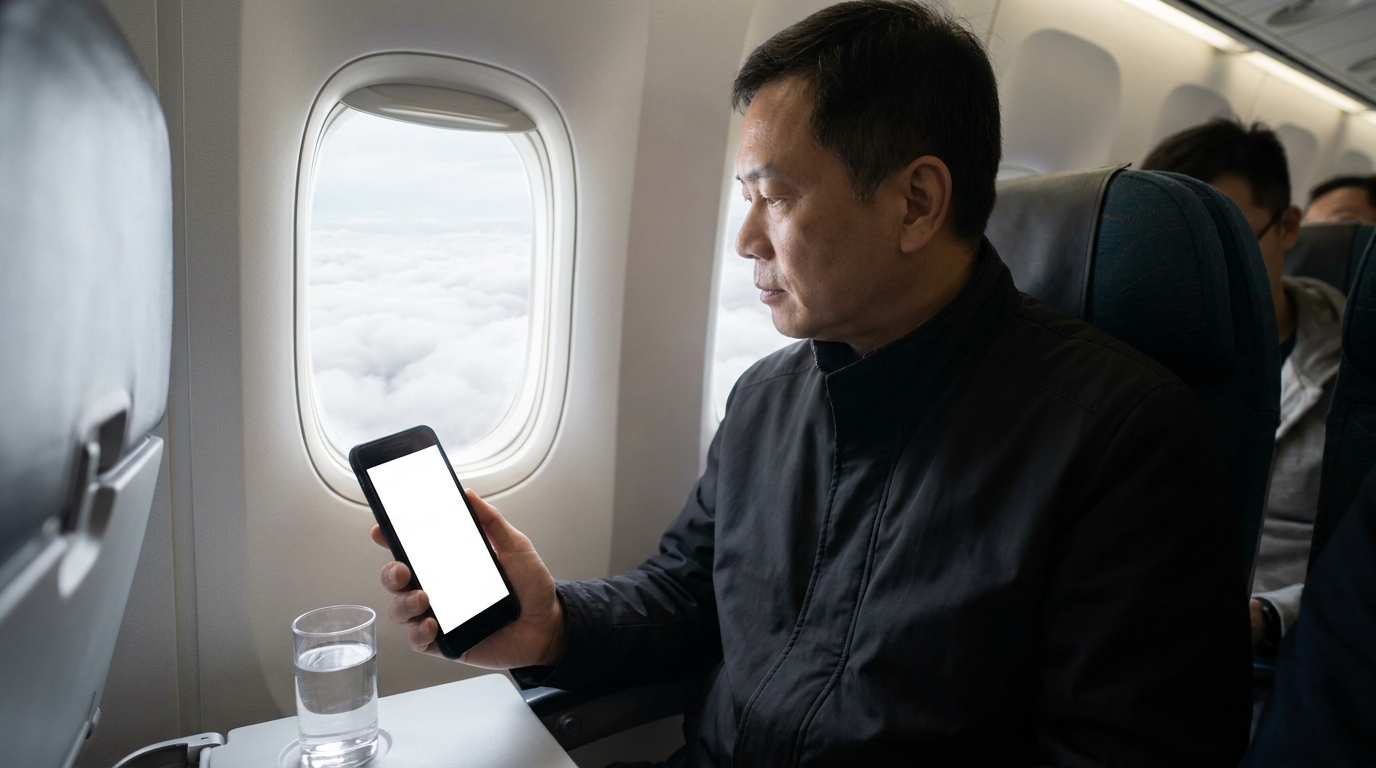
When you're on the plane and about to land in Europe, open your phone settings in the cabin. Turn off "Data Roaming" on your main SIM, then toggle your "Europe Trip" eSIM on and set it as your primary data line. Remember to also turn on "Data Roaming" for this specific eSIM. The moment the plane touches down, you'll see a 5G or 4G signal pop up in the top left corner, and you can instantly text your family that you've arrived safely! Simple, right?
6. Summary: Sort Out Your Europe Roaming in One Go
Traveling to Europe for fun or work already requires a ton of prep—booking flights, reserving hotels, planning itineraries. There's really no need to stress over basic needs like internet access. A high-quality Europe multi-country eSIM pass effortlessly connects you across 39 countries, eliminating the hassle of swapping SIMs, carrying bulky power banks, or fearing you'll lose your main SIM. It's truly the ultimate travel solution for 2026.
After reading this guide, you should have a comprehensive understanding of how to choose and set up a Europe eSIM. Whether you're a backpacker chasing the best value or a business elite demanding network stability, there's an eSIM on the market for you. The most important thing is to base your decision on your trip duration, data needs, and whether you'll be crossing multiple borders.
Want the latest and greatest broadband or mobile plan quotes without the hassle of comparing prices yourself? Remember to check out our KingBroadband website! We gather the most up-to-date telecom info and exclusive offers in Hong Kong, saving you time and money to easily find the best plans. Wishing everyone a happy and smooth European trip!