
Published: 5 July 2026 | Category: Comparison
1. Travelling in 2026: Still Using a Physical SIM Card?
It's 2026, and the way we travel has completely changed. In the past, we had to queue up at the airport to buy a physical SIM card before our flight, or order one online and pick it up in Sham Shui Po's Apliu Street. Once on the plane, the most nerve-wracking part was taking out a paperclip to poke your phone, then carefully hiding your Hong Kong SIM card deep inside your wallet, terrified that dropping it on the cabin carpet meant it was gone forever. Thanks to modern tech, eSIMs (embedded SIMs) have now become the new normal for travel data.
eSIMs aren't exactly new, but by 2026, many new smartphones (especially certain flagship models sold overseas) have completely ditched the physical SIM tray, forcing everyone to embrace the new tech. So, should you still buy a physical SIM for your travels? Or should you fully switch to eSIMs? Or perhaps, is it just easier to use a daily roaming plan from your Hong Kong telecom provider? In this article, we'll break it all down from multiple angles.
Before we dive into the deep comparison, ask yourself these few questions:
- Does your phone support eSIM? (Most flagship phones from recent years do)
- Do you need to keep your Hong Kong number active to receive SMS (like OTPs for credit card purchases)?
- Are you a bit clumsy and prone to losing or dropping things?
- Are you visiting a single country, or travelling across multiple countries (like a Eurotrip)?
Once you understand your usage habits and travel needs, the following analysis will help you find the perfect data solution!
2. eSIM vs Physical SIM: How They Work and The Ultimate Showdown
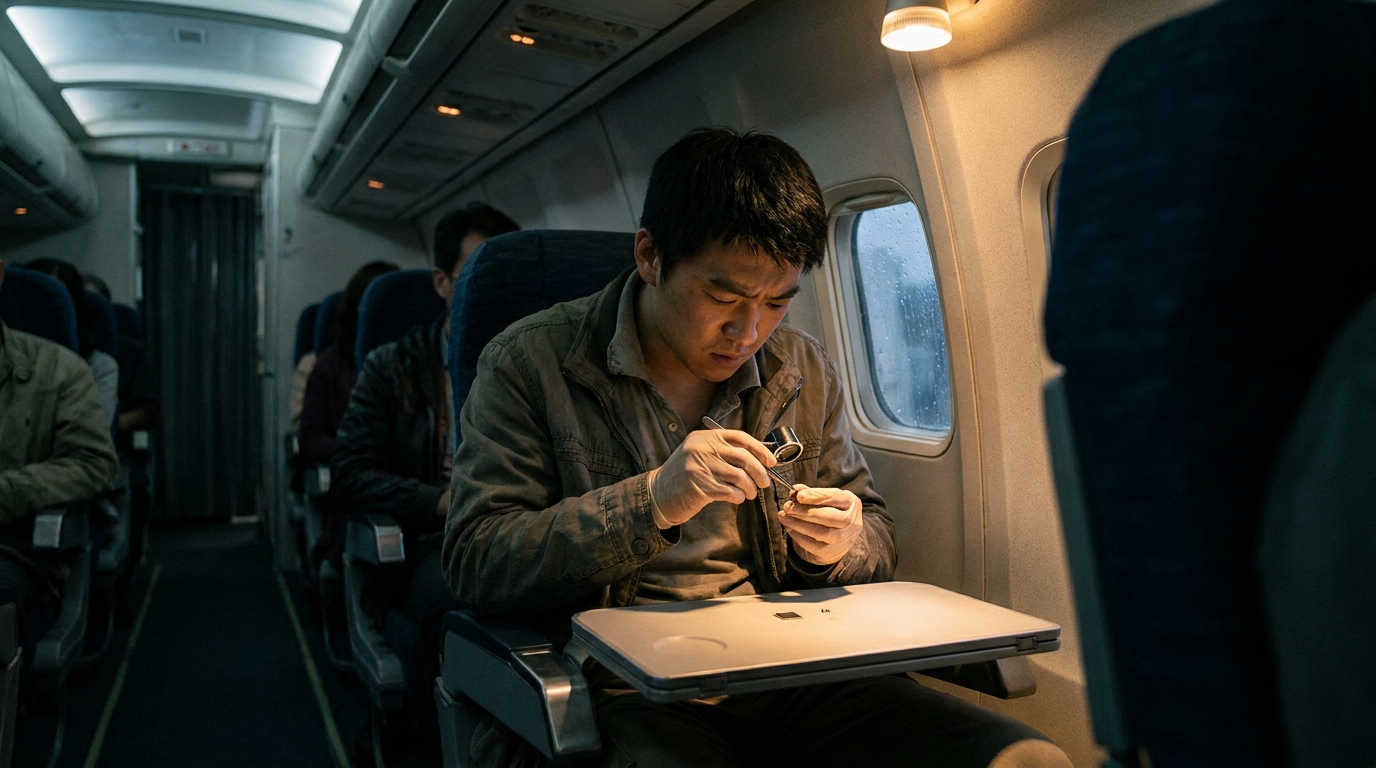
To choose the best option, you first need to understand the difference between the two. We're all familiar with physical SIM cards—they're just plastic cards with a chip. An eSIM, on the other hand, is a chip soldered directly onto your phone's motherboard. When you want to switch networks or buy travel data, you simply scan a QR code or tap a few buttons in an app to download the new telecom profile to your phone. You get instant internet access without needing to physically insert or swap any cards.
| Comparison | eSIM (Digital SIM) | Physical Travel SIM |
|---|---|---|
| Purchase & Activation | Buy online, receive a QR code instantly, scan and use | Buy in-store or wait for delivery, requires a SIM pin to swap |
| Risk of Loss | Zero risk, unless you lose your phone | Extremely high, especially dropping your HK SIM while swapping |
| Keep HK Number Active | Yes! If your phone supports dual SIM, you can use both simultaneously | Requires a dual SIM tray, otherwise you must remove your HK SIM |
| Device Support | Limited to mid-to-high-end or newer smartphones | 100% support for all unlocked phones |
| Eco-friendliness | Extremely eco-friendly, no plastic waste | Disposable, creates plastic waste |
As you can see from the table above, eSIMs absolutely win in terms of convenience and security. This is especially true for Hongkongers, who usually need to stay connected to things back home or receive SMS verification codes while travelling. With an eSIM, you can keep your physical HK SIM card inside your phone (with data roaming turned off) and use the eSIM for overseas data. This gives you a perfect dual SIM setup without the fear of racking up a shocking roaming bill!
However, physical SIM cards still have their market. If you're buying a cheap backup phone for travel, or an entry-level phone for the elderly, they often don't support eSIMs yet. In these cases, a traditional physical SIM is your only option.
3. Three Major Travel Scenarios: Which is Best for You?
Theory aside, let's look at a few common real-life scenarios so you can see which solution fits you best.
Scenario 1: The Frequent Business Traveller
If you're flying several times a month—Japan one week, the Mainland the next—then an eSIM or a telecom roaming plan is absolutely your top choice. Business travellers value efficiency; the moment you land, you need to reply to emails and WhatsApp messages. eSIMs allow you to store multiple profiles for different countries on your phone. Just toggle on the one you need when you arrive, with no need to buy a new card every time. Better yet, signing up for a Greater Bay Area or pan-Asia data plan saves the most time.
Scenario 2: Family Trips / Travelling with the Elderly
The biggest fear when travelling with family is chaos. Older relatives' phones might not support eSIMs, so the safest bet is to buy them a physical SIM card and swap it in Hong Kong before departure, or rent a Wi-Fi egg for the whole family to share. If your own phone can act as a hotspot, you can buy a high-capacity eSIM for yourself and share the connection with your family. Just be sure to check if the telecom provider throttles tethering speeds.
Scenario 3: Long-haul Backpackers on a Multi-country Trip
Backpacking across Europe for a month and hopping between a dozen countries used to mean buying expensive pan-European physical SIMs. Now, with eSIMs, you can just buy a "Regional Europe eSIM" where one plan covers dozens of countries. If you run out of data halfway through, you can instantly top up or buy a new eSIM online wherever there's Wi-Fi. No need to hunt down local telecom shops—it's incredibly convenient.
🔥 Kingbroadband's Top Pick: The Unbeatable Dual SIM Combo
Our ultimate recommended setup is this: use a physical SIM (or local eSIM) for your main Hong Kong number, and buy a travel-specific eSIM before you depart. You'll get instant internet access the moment you land, while ensuring your HK number can still receive important SMS messages. It's the safest and most cost-effective combo right now!

4. HK Telecom Roaming Plans vs Travel SIMs: Which is the Best Deal?
Aside from buying third-party eSIMs or physical cards, using a roaming plan directly from your Hong Kong telecom provider is actually a very popular choice. To compete for business, major HK telecoms (like HKT, HKBN, CMHK, SmarTone, 3HK, and CSL) have significantly slashed their roaming charges in recent years—they're no longer the "astronomical" prices of the past.
Let's look at a rough price comparison (prices are for reference only; actual costs depend on the latest telecom quotes):
- Single-use Travel SIMs (eSIM/Physical): For popular destinations like Japan, Korea, or Taiwan, 5 to 7 days of unlimited data (usually subject to FUP) costs around $70 to $150. The pro is that it's cheap; the con is you have to handle the setup yourself.
- Telecom Daily Roaming Plans: All major networks offer "seamless roaming" daily passes for about $15 to $30 a day. A 5-day trip will cost around $75 to $150. The pro is extreme convenience—just turn on roaming when you land. Plus, your IP address remains in Hong Kong, so you won't get blocked when watching ViuTV or using banking apps.
- Greater Bay Area / APAC Monthly Plans: If you frequently travel to the Mainland or Macau, Greater Bay Area plans from CMHK or 3HK are the best value. For around $150 to $198/mo, you get shared data across China, HK, Macau, and Taiwan, so you never have to worry about buying SIM cards again.
⚠️ Bill Shock Warning: If you decide to buy a travel SIM (and not use your home network's roaming), you MUST remember to turn off "Data Roaming" for your HK SIM in your phone settings before you depart! Otherwise, the moment your phone connects to a foreign network, you could be charged per KB at standard roaming rates. You'll be crying tears of regret when you return to HK and receive a bill for thousands of dollars.
If you find comparing prices too much of a hassle, you can always just ask us at Kingbroadband for help. We have all the latest mobile plan and home broadband monthly fee info from every HK telecom, and we can help you compare which network's roaming add-ons offer the best bang for your buck, saving you a ton of research time.

5. Summary: The Ultimate Pre-Trip Data Checklist
To sum up, by 2026, eSIMs have completely surpassed traditional physical SIM cards in terms of convenience, eco-friendliness, and dual SIM flexibility. If your phone supports it, we highly recommend trying an eSIM for your next trip. Of course, if you demand ultimate convenience or you're a business traveller, simply upgrading your HK telecom mobile plan with a roaming package is the cleanest and easiest way to go.
Finally, here is the ultimate pre-trip data checklist. Follow these steps and you'll be foolproof:
- Check your phone specs: Look up your phone model online to see if it supports eSIM. If not, buy a physical SIM card early.
- Buy and scan in advance: If you're getting an eSIM, it's best to scan the QR code and install the profile while you're still at home in HK with stable Wi-Fi. Whatever you do, don't wait until you're at a foreign airport with no internet to set it up.
- Set labels and default networks: In your phone settings, rename the newly added eSIM to "Travel", then switch your mobile data over to it. At the same time, ensure data roaming on your main HK SIM is turned off.
- Download offline maps: No matter how confident you are in your SIM, you should always download local offline maps on Google Maps before you leave, just in case the reception is spotty when you arrive.
- Shop around: Before renewing your contract or signing up for a new mobile plan, check carefully if your plan includes roaming. If you're not sure, keep an eye on the latest promo trends from major telecoms!
💡 Tip: Many people think buying an eSIM means unlimited high-speed internet. In reality, most travel SIMs have a daily FUP (Fair Usage Policy, like 1GB or 2GB per day). If you plan on binge-watching videos or live-streaming on your trip, we suggest buying a larger capacity plan, or just applying for a full-speed daily roaming pass from your local telecom!
We hope this guide helps! Wishing you smooth travels for every trip in 2026, with lightning-fast internet for all your check-ins and posts!