
Published: 11 August 2026 | Category: Tech Trends
1. What is a "Digital Twin"?
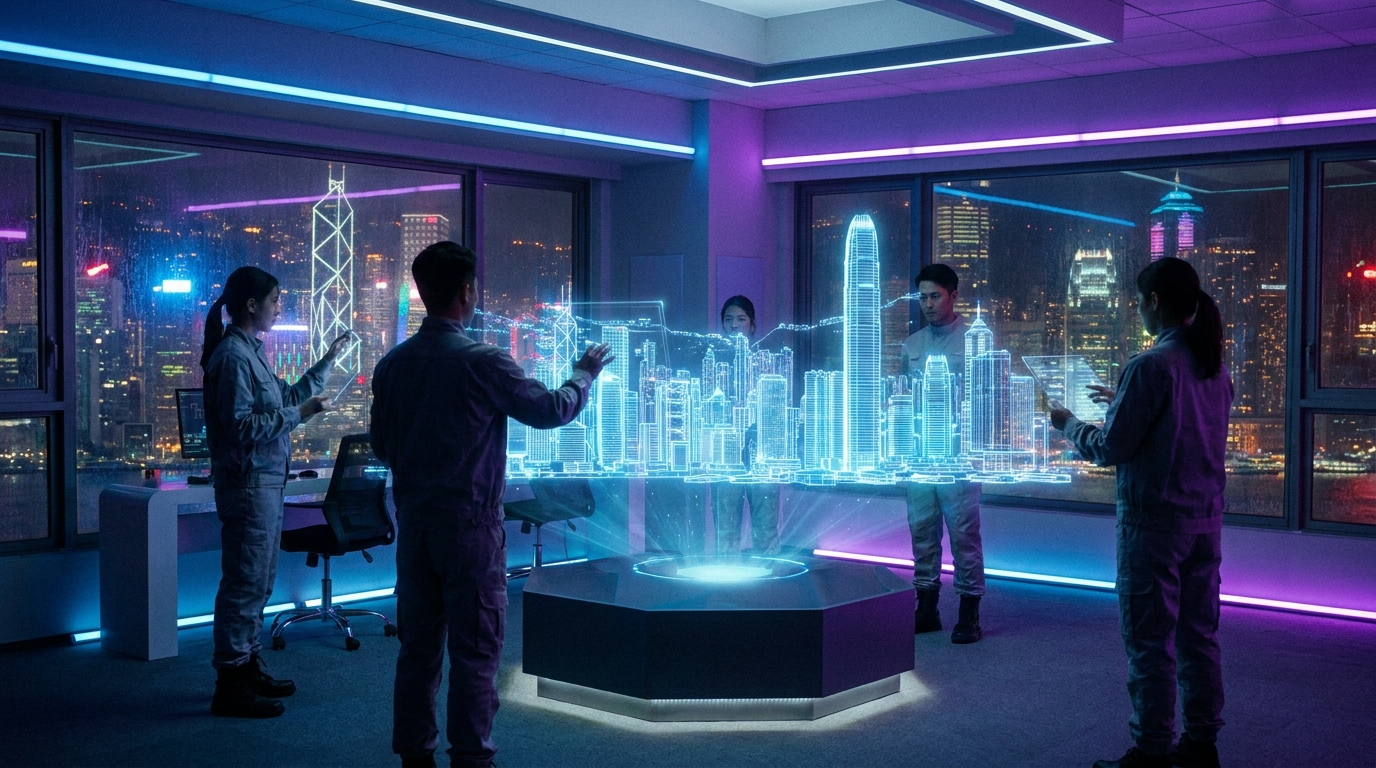
These days, whether you're out and about or grabbing dinner with friends in IT or engineering, you're bound to hear them talk about "Digital Twins". So what exactly is this sci-fi-sounding term? Simply put, a digital twin is a 1:1 virtual "twin brother" of a physical object, system, or even an entire building, created inside a computer. The most overpowered part is that this virtual model isn't a static object—it receives real-time data through IoT (Internet of Things) sensors installed in the real world. That means whatever is happening in the actual building—how high the AC is blasting, which lifts are moving, or if a water pipe is leaking—the virtual model will sync and display it instantly.
The biggest difference between this tech and traditional 3D models is "real-time data" and "two-way interaction". In the past, a 3D rendering became useless once the building was built. But now, with a digital twin, management can run simulation tests on the virtual model. For example, if a T10 typhoon hits tomorrow, how will the building handle the wind load? If there's a sudden blackout, how long will the backup power last? You can test all of this on the twin without risking the real world. To build a complete Digital Twin, you typically need these core elements:
- Physical object: Could be a bridge, a commercial building, or even the entire Hong Kong International Airport.
- Virtual model: A 3D computer graphic created using high-precision 3D scanning and modelling tech.
- Real-time data connection: Relying on 5G or ultra-fast fibre broadband to transmit data like temperature, pressure, and foot traffic from sensors in milliseconds.
💡 Tip: Many people think Digital Twins are only for massive conglomerates. In reality, the tech has become so accessible that many HK SMEs are starting to experiment with small-scale digital twins in their own offices or warehouses!
2. How is HK Infrastructure Leveraging Digital Twins?
As a super-dense international metropolis, Hong Kong's infrastructure systems are mind-bogglingly complex. To keep the city running smoothly, the government and major public organisations adopted digital twin technology ages ago. For instance, the MTR we take every day and the tunnels we drive through all have Digital Twins working behind the scenes. Engineers don't have to physically go down to the tracks or deep into the tunnels for every inspection; they can just look at the control centre to monitor the wear and tear of various components in real time.
Take Hong Kong International Airport as another example. Handling massive passenger and cargo flows daily, their digital twin system can render the operations of the passenger terminals, aprons, and even baggage carousels in 3D. Which gate is particularly crowded? Which baggage belt is at risk of a jam? The system automatically crunches the numbers and issues alerts so management can deploy staff immediately. Under the Smart City Blueprint, these applications bring huge advantages to Hong Kong. Specific benefits include:
- Predictive Maintenance: Knowing a part is about to fail before it actually breaks, allowing for early replacement to avoid major breakdowns.
- Resource Optimisation: Dispatching more trains where it's crowded and turning off the AC where it's empty, maximising resource efficiency.
- Crisis Management Simulation: In the event of a fire or flood, the system can simulate the best escape routes and rescue plans.
For these mega-infrastructures to achieve second-by-second updates, they absolutely need incredibly robust network infrastructure backing them up. If the network lags and the virtual twin receives data half a beat too late, it could easily trigger a safety crisis. That's why the government and large enterprises have extremely strict requirements for dedicated broadband lines and 5G networks.
3. PropTech Upgrades: Saving Money and Boosting Efficiency
Beyond mega-infrastructure, the property management (PropTech) of commercial buildings and residential estates closest to our daily lives is also a massive stage for Digital Twins. In the past, property management was often reactive—only calling someone to fix a pipe after it bursts, or turning down the AC only after tenants complain it's too hot. But with a digital twin, the "health status" of the entire building is clear at a glance. Today, many Grade A office buildings in Hong Kong have already transformed into smart buildings, fully embracing this tech.
In today's era where ESG and energy conservation are front and centre, digital twins are an absolute godsend for landlords and management companies looking to cut costs. The system collects data on daylight hours, outdoor temperature, and indoor foot traffic, then automatically adjusts the AC temperature and lighting brightness for each floor. Over the long run, the money saved on electricity bills is more than enough to cover the system's cost! Let's take a look at the differences between traditional property management and Digital Twin PropTech:
| Comparison | Traditional Property Management | Digital Twin Property Management |
|---|---|---|
| Problem Detection | Reactive (waiting for complaints / routine patrols) | Proactive (real-time system sensing and prediction) |
| Energy Management | Fixed schedules for AC and lighting | Dynamic real-time adjustments based on foot traffic and weather |
| Maintenance Costs | Higher (emergency repairs for sudden breakdowns) | Lower (predictive maintenance extends lifespan) |
| Human Resources | Requires heavy manpower for day and night patrols | Remote monitoring from a central control room, streamlined manpower |
4. What Does It Take to Pull Off a Digital Twin?
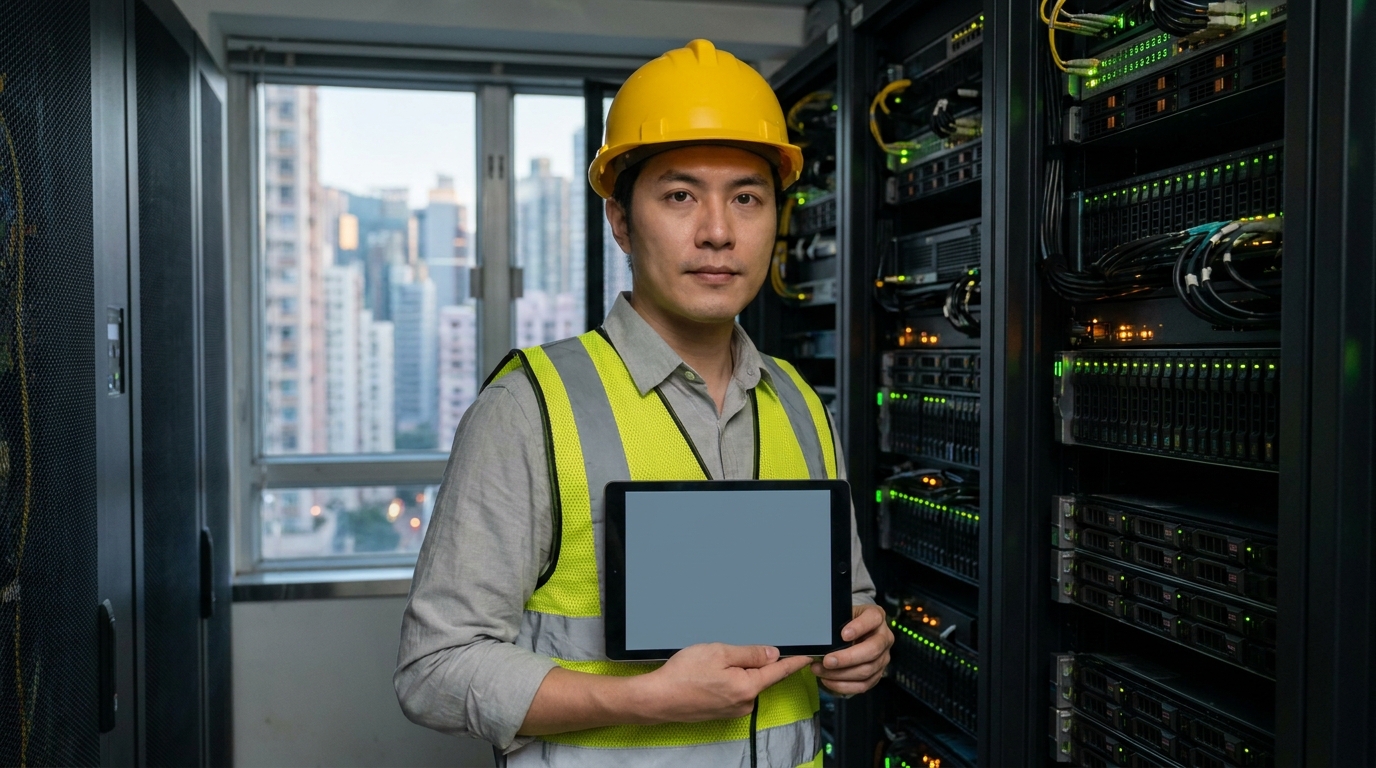
At this point, you might think Digital Twins are incredibly powerful. But to actually pull one off, the most critical factor isn't how pretty the 3D model looks—it's the communications network backing the entire system! Just imagine: if a building is rigged with tens of thousands of IoT sensors firing data to the cloud every second, and your company's business broadband isn't up to par, or your Wi-Fi has dead zones, the digital twin will instantly turn into a "vegetable", completely failing to reflect reality.
In Hong Kong, major telecom operators like HKT, HKBN, and CMHK all have tailor-made network solutions for enterprises. If you want to run a Digital Twin, a standard home broadband or cheap commercial plan just won't cut it. Companies usually need a Dedicated Internet Access (DIA) line of at least 1000M (1G) or even 10G to ensure symmetrical upload and download speeds, guaranteeing that bandwidth isn't shared with anyone else. Here are the must-have network conditions for building a digital twin:
- Low Latency: 5G networks or dedicated broadband lines can achieve latency in the single-digit milliseconds, ensuring control commands are delivered the instant they're sent.
- High Bandwidth: To transmit high-def 3D models and massive amounts of data, you need enough bandwidth to avoid bottlenecks. Typical enterprise plans range from $500 to several thousand dollars a month, depending on speed and SLA (Service Level Agreement).
- High Connection Density: Wi-Fi 6/7 and 5G networks can accommodate a massive number of IoT devices simultaneously without dropping connections due to device overload.
- Redundancy: Large enterprises usually pull two independent lines from different providers like SmarTone or 3HK, so if one goes down, the other takes over.
5. How Can SMEs Get in the Game? What to Watch Out For?
After reading about all these big-league setups, HK SME bosses or owners of smaller commercial buildings might ask: "I want in, but do I need to invest millions to get started?" Not at all! There are plenty of modular SaaS (Software as a Service) solutions on the market now. SMEs can adopt a piecemeal strategy, testing the waters with the simplest parts first before gradually expanding to a company-wide digital twin.
For example, you could just build a simplified Digital Twin for your warehouse to track inventory locations, temperature, and humidity; or install smart lighting and smart plugs in the office to monitor power consumption. The most important thing is to assess your company's pain points first and tackle them directly. However, when you connect everything to the internet, there's one thing you absolutely cannot ignore:
⚠️ Warning: Cybersecurity is absolutely critical! Since a digital twin can reflect and even control physical equipment in real time, if hackers breach the system, they could freely control your company's lighting, door locks, or even access confidential data. You must equip yourself with an enterprise-grade Firewall and endpoint protection!
If you're ready to upgrade your company, check out this starter recommendation below:
🔥 SME Upgrade Starter Pack
We recommend starting by upgrading your office network. Contact CSL or HKBN to ask about their latest commercial 5G broadband or 1000M enterprise dedicated lines. Ensure you have a stable Fixed IP and high-speed uploads to lay a solid foundation for deploying IoT sensors in the future. Monthly fees usually range from around $398 to $888 for a very solid start!

6. Summary
Digital Twins are no longer just a concept on paper; they are practical tech genuinely transforming Hong Kong's infrastructure and property management. From massive dispatch operations at the MTR and airport to commercial buildings automatically turning off the AC to save power, the efficiency gains and long-term economic benefits brought by Digital Twins are incredibly obvious. For HK enterprises, understanding and adopting this tech early on will absolutely help boost competitiveness and even score a few extra points on ESG ratings.
But remember, no matter how powerful the software is or how realistic the 3D model looks, without an ultra-fast, stable, and low-latency network to transmit real-time data, your digital twin is nothing more than a high-end offline game. To truly unleash the power of a Digital Twin, the first step is always sorting out your company's broadband and network infrastructure. If you're itching to give your company's network a major upgrade to embrace a smart future, head over to King Broadband now to compare enterprise solutions from major telecom operators and find the most cost-effective plan that suits your needs!