
Published: 2 June 2026 | Category: Consumer Rights
1. Why Do Telecoms Overcharge? Uncovering Common Traps
Many Hongkongers opt for credit card auto-pay when signing up for home broadband or mobile plans, either for convenience or to snag welcome offers. But when the monthly statement arrives, do you actually check the numbers? Plenty of victims have been inexplicably overcharged by telecoms (like HKT, HKBN, CMHK, etc.), or even billed after their contracts ended! In reality, telecom "billing errors" or "overcharging" usually stem from a few common traps. Knowing your enemy is the first step to protecting your wallet.
- The auto-renewal devil in the details: This is the most common fatal flaw. After your contract expires (say, 24 months), if you don't actively terminate or renew it, many telecoms will "auto-renew" based on the T&Cs. Worse, they'll charge you the exorbitant "standard rate," suddenly jumping from $198/mo to $398/mo.
- Unreturned equipment penalties: You've filled out the cut form, but forgot to return the router or set-top box to the retail store before the deadline. The system automatically assumes you bought it, directly deducting hundreds or even over $1,000 in equipment fees from your credit card.
- Accidental Value-Added Services (VAS): Sometimes a wrong click, or the end of a free trial for antivirus software or streaming platforms, triggers the system to auto-subscribe and start charging you.
- Pure system errors: Though less common, when a telecom upgrades or migrates its billing system, duplicate charges or miscalculated deposits can genuinely happen.
Once you understand these causes, you'll have a good guess at what's happening when a bombshell drops on your statement, rather than being completely clueless.
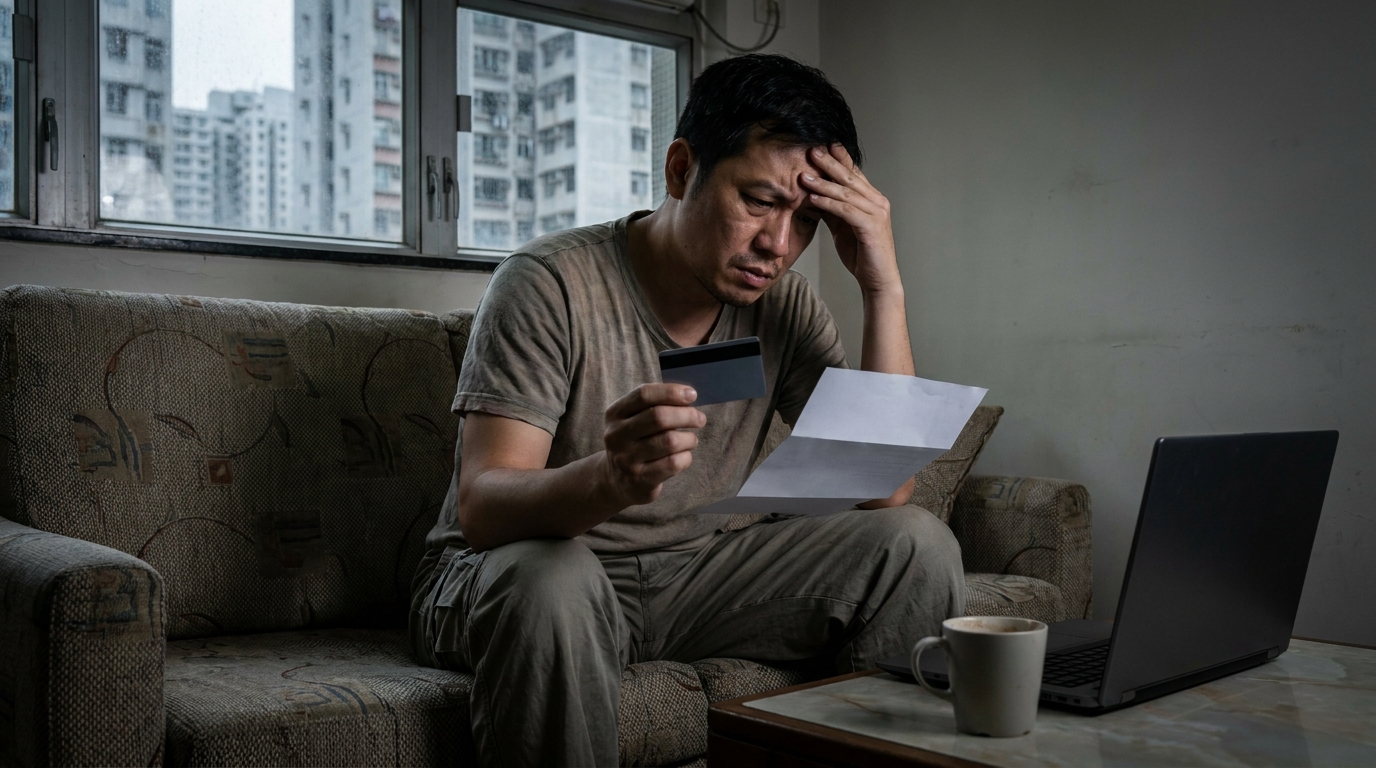
2. Discovered an Overcharge? What to Do Immediately
When you spot an unreasonable telecom charge on your credit card app or physical statement, your first reaction is naturally anger. But remember, don't act impulsively! Staying calm and gathering all your evidence is the best strategy. Some people immediately call the bank to "cut the card," but this might not solve the problem. If the transaction is already authorized, the charge will still hit your account even if you cancel the card, and you might even damage your credit rating (TU) due to outstanding payments.
- Log into the telecom app to download detailed invoices: Don't just look at that one line on your credit card statement. Immediately log into your telecom's (e.g., SmarTone, 3HK, CSL, etc.) online account or mobile app, find the detailed invoice for that month, and see exactly what the charge is for.
- Dig up your original contract copy: Check your emails or physical documents to confirm your contract expiry date and whether you signed any clauses authorizing auto-renewal.
- Screenshot to preserve evidence: Screenshot and save all relevant chat records (if you spoke to a sales rep before), billing details in the app, and contract terms.
- Organize a timeline: Jot down a simple timeline on paper—when the contract ended, when you cancelled the service, and when you discovered the charge. This makes it easier to confront customer service later.
⚠️ Note: If the payment due date has already passed by the time you notice, absolutely do not refuse to pay your entire credit card bill out of spite. It's recommended to pay the full balance first to avoid interest and late fees. Once your claim is successful, the bank will refund the money back to your credit card.
3. Practical Negotiation Tactics with Telecoms
With your ammo ready, the next step is calling the telecom's customer service (CS) hotline. Negotiating with CS is an art. You need to be firm but avoid throwing a tantrum. The frontline staff answering the phone are just employees; yelling at them won't help. The most important thing is to present your case logically and factually, forcing them to escalate the case to a manager or a specialized department.
At the start of the call, you can politely ask for the staff member's ID number and state that you are also recording the call. Then, clearly point out that you never authorized the extra charge and demand an immediate refund. Below is a comparison table to show you what effective communication looks like:
| Negotiation Attitude | Wrong Way (Venting) | Right Way (Problem-Solving) |
|---|---|---|
| Opening | "Are you guys a scam shop? Why did you deduct my money for no reason! Refund me right now!" | "Hi, I noticed an unexplained charge of $598 on this month's statement. I didn't authorize this, please look into it for me." |
| Handling Pushback | "I don't care! Just fix it for me!" | "The contract terms do not state that I must renew at the standard rate, and I gave early notice not to renew. Please escalate this case to your manager." |
| Demanding Commitment | (Hangs up without asking for follow-up details) | "When can I expect a concrete reply? Please give me a Case Number and send me a confirmation email." |

4. How Can the Bank's Chargeback Mechanism Help You?
If the telecom plays hardball, refuses to refund, or keeps stalling, you have one last trump card: contacting your card-issuing bank to apply for a "Chargeback" (disputed transaction). A chargeback is a consumer protection mechanism by credit card networks like Visa and Mastercard. When a cardholder fails to receive goods/services or is unreasonably charged by a merchant, they can force a refund from the merchant through the bank.
However, applying for a chargeback has a time limit (usually within 60 days of the transaction date), and you must prove that you've attempted to negotiate with the merchant but failed. You'll need to prepare the following information to submit your application to the bank:
- Disputed Transaction Form: Request this from your card-issuing bank and fill it out, stating the reason for the dispute (e.g., service cancelled but still billed / unauthorized transaction).
- Proof of Service Cancellation: If you previously submitted a cut form or have a confirmation SMS, this is your strongest piece of evidence.
- Negotiation Records: Provide your email correspondence with telecom CS, or the call date, time, and Case Number, to prove they refused a refund.
- Contract Copy: To prove you did not agree to the charge.
💡 Tip: As long as you provide sufficient evidence, the bank will usually hold the disputed funds or even refund you first, and then negotiate with the telecom on your behalf. Facing chargeback pressure from the bank, telecoms are usually willing to compromise, because if a merchant racks up too many chargeback records, they can be fined or even terminated by the credit card network.
5. Prevention: How to Avoid Falling into the Trap Again?
Going through all this hassle just to get your money back is exhausting. To avoid suffering this kind of unprovoked disaster in the future, prevention is the best cure. In fact, just changing a few daily financial and contract management habits can drastically reduce the risk of being randomly overcharged by telecoms.
Here are a few self-protection measures we strongly recommend everyone take:
- Ditch credit card auto-pay: Unless you're doing it for welcome offers or have no other choice, try switching to PPS, FPS, or manual monthly online banking payments. When the initiative is in your hands, you'll never have to worry about being wrongly charged.
- Leverage virtual credit cards: If you must use a credit card, consider using a virtual credit card that lets you lock the card anytime or set a custom monthly deduction limit. If they try to charge a standard rate of $400 but you've set a $200 limit, the transaction will automatically fail.
- Mark the contract end date on your calendar: As soon as you sign a new contract, set a reminder on your phone's calendar for "two months before contract expiry." Since most telecoms require at least one month's notice for service termination, preparing early prevents last-minute panic.
- Ask for an equipment return receipt: When you go to a retail store to return a router or modem, make sure you get a black-and-white receipt and take a photo for backup. Never just accept a staff member verbally saying "all done."

Summary: Choose Plans Smartly and Avoid the Grief
Encountering telecom billing errors is infuriating, but as long as you handle it calmly, keep your contracts and chat records, and utilize the bank's chargeback mechanism, you can successfully recover your losses in the vast majority of cases. Remember, as consumers, we absolutely have the right to say no to unreasonable charges!
Of course, the most fundamental solution is to choose a reputable telecom and home broadband plan with transparent pricing from the start. A lot of times, people fall into traps because they initially signed up through shady street booth sales reps with obscure terms, and when things go wrong, the sales rep is nowhere to be found.
🔥 Key Takeaways for Protecting Your Rights
- Don't blindly cut your card; download the detailed invoice first to find out the cause.
- Stay calm when negotiating with CS, record the staff ID, and demand case escalation.
- Leverage the credit card's 60-day chargeback dispute mechanism.
- Switch to PPS or manual payments in the future, and set contract expiry reminders on your calendar.
Want to avoid contract traps? Next time your home or office needs to renew or switch providers, do a bit more homework, or use a professional platform to clearly compare the hidden terms and actual fees of major telecoms. That way, you won't have to worry about falling into the bottomless abyss of "auto-renewals"!